
 |
Classifications now and then |

 |
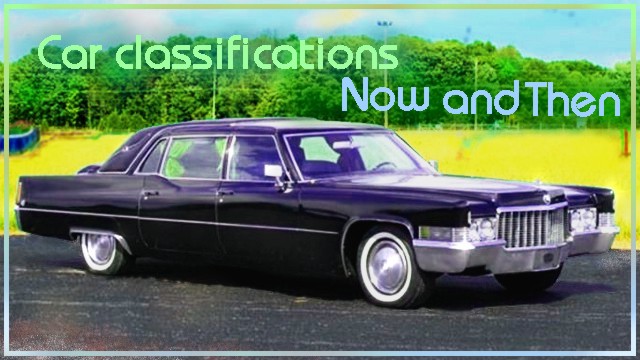
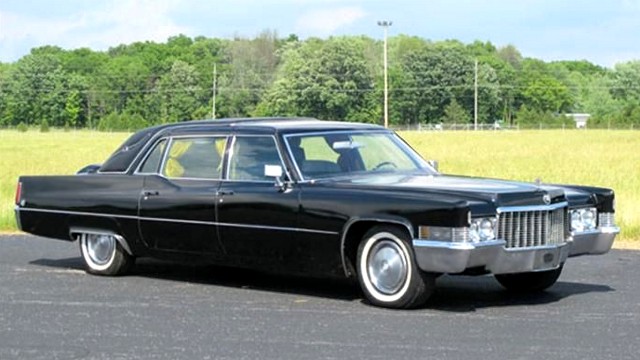
Cadillac 75 is also known as Cadillac Fleetwood.




| Stories |
|
|
Classifications now and then |
|
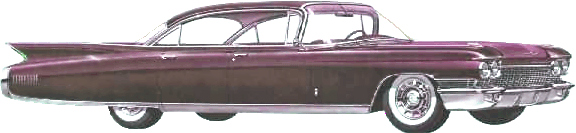
Cadillac 75 is also known as Cadillac Fleetwood.
Car classifications now and then
Traditional American Executive Car, Limousine
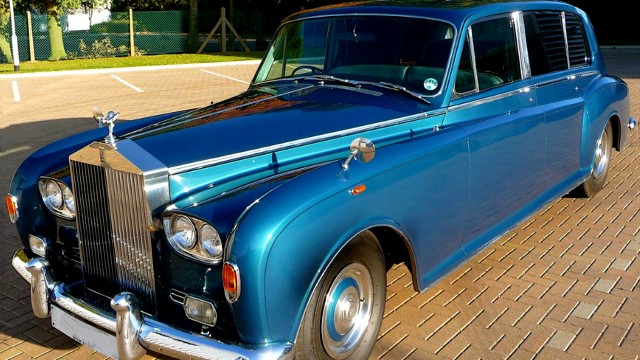
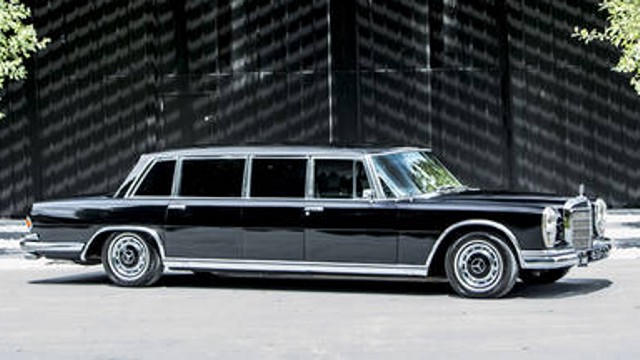
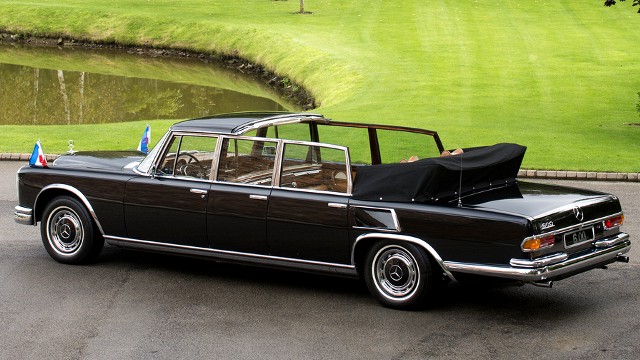
The biggest mass produced car is traditional American Executive car. It was over 6 m / 20 ft long. Cadillac 75 and others died at the same times with Full-Sized cars. Biggest new Cadillac's and Lincoln's fall into new Full Sized car classification. In size they are either equal or slightly bigger than European and Asian executive cars. Outside USA there was two better known executive cars : Rolls Royce Phantom and Mercedes 600 Pullman.
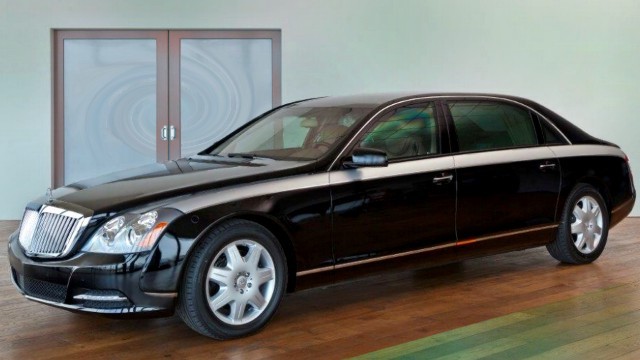
Nowadays you can get a handmade car, with special order for longer wheelbase and length, which equals in size. Four Toyota Century Royals', which were made for Imperial House of Japan are examples from such. They were built in between 2006-2008. Mercedes built Maybach 62 in between 1997-2013. It is the last car, which is designed to this size.
In year 2018 latest Rolls Royce Phantom VIII ( 2017 ) is the biggest designed car. It is 5.8 meters long, LWB version is almost 6 meters.
Cadillac's flagship ... usually 75 ... is the only US made car which was in the executive class throughout it's lifetime. Other manufacturers had limousines in production occasionally. Chrysler New Yorker and Lincoln Continental were sometimes made to executive class.
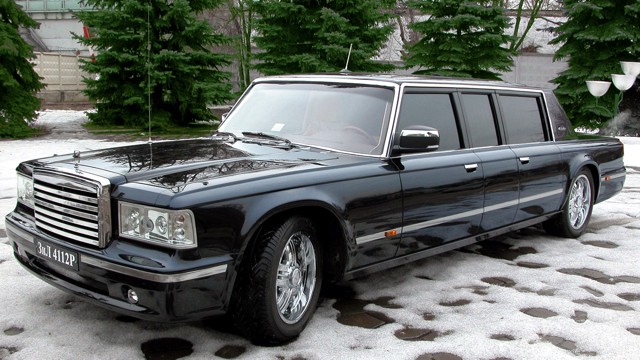
In USSR-Russia they built ZIL cars. Right after WW II they were lengthened to 6 meter length. Manufacturing ended in 2012. Last design is obviously from the year 1978. This version had 7.7 liter V8. Top speed is 190 km/h, fuel consumption is 22 liters per 100 km.
Traditional American Full Sized Car / Modern Limo
Second biggest car is traditional American Full sized car, like Jack's Caprice. The length of these varies from 5.3 to 5.5 meters ... 16-17 feet. Full sized cars were the best selling cars in USA until mid 1980's. Ford Crown Victoria / Ford LTD is the last full sized US car, sales for civilians ended in 2007, to cab companies, cops, and other organizations in 2011. In 2018 there was few handmade cars, like Rolls Royce Ghost, Bentley Mulsanne, Mercedes S Maybach, whose size is equal to traditional full sized car.
US muscle cars were usually either mid-sized or pony cars. You could buy many full sized car with 2 door coupe body and big V8 engine. From these Chevrolet Impala is the only one, which is sometimes considered to be a muscle car. It was optioned with SS performance pack, just like smaller Chevrolet Nova.
US full sized car got the length of around 5.5 meters in the mid 1950's. After WW II full sized cars grew to little over 5 meters. T-Ford was 3.4 meters, A-Ford from 1928 was already 4.2 meters. In 1930's great recession messed car markets and manufacturing. V8 engines came to US cars 1930's.
In the early 1970's US car manufacturers competed with the size. Full sized models were 5.8 to 6.0 meters long. In late 1970's sizes fell back to 5.5 meters.
American Full Sized / European Executive / Traditional American Mid-Sized Car
Although you can still buy Full-Sized cars in USA, they are nowadays smaller than before. Size equals to European-Asian executive cars. These cars used to be the third biggest mass produced cars. In length they are almost one feet or 30 cm shorter than full sized American cars were ... until 1990's. Executive cars are little over 5m or 15 ft long. Even then, when they are made with longer wheelbase [ LWB version ], they are shorter than old Full-Sized Americans.
European executive car - class was the smallest popular US car until 1960's. In USA this car was Mid-sized car.
Mid-Sized / Large Family / Traditional Pony Car
Outside USA there was and is Large Family car. Length of large family car is usually 4.8 - 4.9 meters or 14.5 feet. When really big US cars were downsized, mid-size went down to large family car class.In Europe cars got smaller near year 2000. Ford, Opel and Fiat dropped Large Family cars from their product line. All three had held the big cars in their product lines for ages. Large family car makers SAAB and Volvo died as individual car makers with their own models. Construction of bigger cars was left to BMW, Mercedes, Peugeot-Citroen and VW-Audi.
Toyota Camry, BMW 5-series, Mercedes C-class and Jack's Citroen C5 belong to well known large family cars. Mid-sized cars are nowadays the best selling cars in USA.
The first pony sized US car was Nash-Rambler, which was introduced in 1954. Pony sized car is 4.5-4.6 meters long. Official names for Pony cars are Family Car and Compact Car in USA.
Family / Subcompact Car
When you go down from Pony / Large Family cars, the next class is Family Car. It is around 4.5 meters, the standard engine is usually 1.6 liters, another popular engine option is 2 liters. Cars like Ford Mondeo and Toyota Avensis belong to this class.At the same time with the first pony car, in 1954, AMC introduced Nash Metropolitan / Hudson Metropolitan. Metropolitan is the first US made mass-produced sub-Compact car. Sub-Compact is app 30 cm / 1 feet shorter than pony car.
Small Family Car / Compact Car
The best selling cars in the world - Toyota Corolla/Auris and VW Golf - belong to small family cars. Traditionally the standard engine of the non-American small family car is 1.3 liters, then it has a popular 1.6 liter engine option. Length is somewhere near 4 meters.Nowadays these cars are the smallest 4 door cars. In the past they had only 2 doors. 4 door body was hardly ever offered as an option for the buyer.
Outside USA small family car superseded super mini cars in 1970's. Nowadays small family car is the 2nd popular in USA. The most popular is new mid sized car.
Competition in this class is tough. With size most European-Japanese family cars would go to family car class. But manufacturers have usually models for the family car class, too. Toyota and VW for example are both 4.3 meters long, with size they would go to family car class.
? Quite many cars are nowadays sold with various model names. They are all based on the same chassis and tech : Wheelbase, suspension, steering, engines, transmissions and space in passenger compartment are the same. No one can afford to design many chassis-techs to one class. Model name is based on intended markets and location of the factory, where the car is built. Cars which are built with license are usually based on previous model's chassis-tech.
Supermini / City Car
Outside USA car classifications continue with Supermini and City Car. Small cars are less than 4 meters, the engine is nowadays around 1 liter inline 4. Usually Supermini is over and City Car is less than 3.5 meters long.These classifications and their names varies by the purpose, manufacturer and time. Small cars are too small for average buyers, when they are number ones in the national sales charts, the nation usually suffers from financial difficulties or tight tax policies. Gas or bigger polluters ... alias cars ... are taxed heavily.
The best known and most successful supermini car is Morris Mini from 1960-70's. It is only 3 meters long.
The best known city car, Fiat 500 "Topolino" ( 1937-55 ), is 3.3 meters long. Fiat 500 from Mini's era is about the same size than Mini. It used to be the smallest popular car in the world. Topolino was rather lonely and unique, before small City cars ( with marginal production ) came into markets.
During 1960's Italian Fiat 500, 600 and 850, British Morris Mini and Hillman Imp dominated small car markets In 1970's Italian Fiat 127 and Japanese Nissan 100A were the names of the class. In 1980's GM Europe and Ford Europe introduced Opel Corsa and Ford Fiesta for this class. Nissan got new name - Micra, Fiat was converted into Uno.
In domestic Japanese / Asian markets there are and has been many small car makes and models.
Sales of the super mini cars have been falling from 1980's.
People have been talking about the coming of city cars about 50 years. These talks are based on fuel economy, lack of park places and rushes. They forgot practical issues. City car misses sufficient seat and luggage space for common family. Same space demand goes also to modern 2nd car, second is used to transport kids and shoppings as well as the primary car. Only the user is different.
USA is the only country, where households often had two cars. The most common second car was pick up.
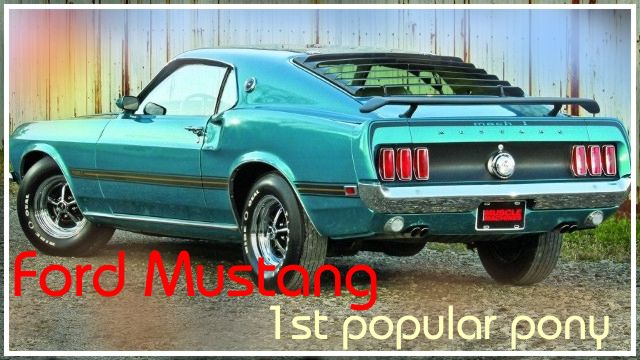
Ford Mustang, the first popular pony car
In early 1960's all US car manufacturers followed AMC and started to build Pony cars and smaller Sub-Compact cars.
The best known American Pony Car is Ford Mustang. Mustang came to markets ten years after Rambler. Mustang was originally a common family car, which was not available with 4 door body. In 1964, when it was released, it was the best selling car in USA. Sales numbers of the sport cars are always far from best selling and most popular models. In early 1970's Mustang was a sport / muscle car. After oil crisis Ford introduced Mustang II. It was a small 2-door family car. Slow conversion to current sport car began in 1980's.
Ford Mustang's developer team's leader was Lee Iaocca. He is often said to be the creator of the pony car class. Although not the first, Ford Mustang is the first really successful pony car release. Common faulty belief is partially based on an old fictional TV-series about Ford Mustang's creation and Iaocca's actions. Over 20 years later Chrysler was in deep troubles. It hired Iaocca for running the company. Iaocca managed to save Chrysler from bankruptcy. He negotiated rather big wage cuts with workers. His own sign up salary was said to be only one dollar a year.
Mustang is the only US made muscle* car with mixed history. Two other existing, Chevrolet Camaro, Dodge Challenger and also the dead ones have always been sport cars, with limited production. These models were developed in the late 1960's, when muscle cars boomed in US markets. Muscle car has two door body, 4-5 seats and powerful engine. Powers and engine sizes peaked in 1969-71. The most powerful was Pontiac GTO. GTO with most powerful engine option had a nickname "Judge". Muscle cars went out from fashion with oil crisis, 1973. Only few models survived.
* In here muscle car has 4-5 seats, and sport car only 2 or 2+2 seats.
- - Muscle cars - -
Most original muscle cars from the boom belongs to Pony car or mid-sized classes. In late 1960's it was possible to build a muscle car from any US made car. They all had coupe and convertible variations. They had powerful engine options, sometimes it was also possible to buy sport pack into car. From the below you find the best known and most wanted muscles.
Dodge had two popular muscles, Challenger and Charger. Charger belongs to Mid-sized and Charger to pony class. Then there is Dodge Superbee muscle car. Superbee is special-tuned version from mid-sized Dodge Coronet.
Plymouth had also two muscles. Plymouth Barracuda ( later Cuda ) cost more than Roadrunner. Roadrunner is mid-sized and Cuda is pony car. Plymouth's Super bee like car was Plymouth GTX, based on Plymouth Belvedere.
Chevrolet had Camaro and Nova SS -Chevelle 396SS - Impala SS ... Full sized Impala SS is almost the only full sized muscle car. SS refers to Super Sport, these 2 door SS models are usually counted as real muscle cars. When Chevrolet introduced smaller Chevelle 396SS, sales of Impala SS suffered a lot.
Pontiac had two popular muscles Firebird and Le Mans-GTO. Le Mans-GTO belong to mid-sized cars. Firebird is a pony. Pontiac GTO is almost look-a-like to 2 door Le Mans. GTO is actually a muscle car version from Le Mans. Le Mans was originally a sport version from Pontiac Tempest.
AMC had pony class Javelin. Small AMC AMX had only 2 seats. AMX kind of a replaced mid-sized Rambler Marlin. Marlin's production ended in 1967. AMC AMX was discontinue quickly. After that came Javelin AMX. It is the muscle car version from Javelin.
Ford had only Mustang, another Ford label Mercury had Cougar at the borderline. Rather poorly known mid-sized Mustang had powerful Mustang Mach1 version. The actual muscle was Mustang Boss. Then there was Mustang Shelby 500, also a muscle car.
Buick Skylark Gran Sport and later Buick GSX qualifies. Oldsmobile 442 is another rather poorly known muscle car. Oldsmobile 442 Hurst was Mustang Shelby like car. Hurst built and tuned Oldsmobile cars for track races. GM had also Yanco Chevrolets. Yanco built and tuned Chevy cars to the tracks.
Lincoln [Ford], Cadillac [GM], Chrysler [Chrysler] misses notable US made muscle car models. After muscle comes personal luxury car. It is well optioned 2 door coupe, with powerful engine, it is usually built over full sized chassis. These expensive cars do not usually have sport packs in their options. Mentioned borderline line cars are near personal luxury car. From the personal luxury cars, Ford Thunderbird is well known.
The best known cars from the above are obviously, Ford Mustang, Chevrolet Camaro and Pontiac Firebird. But these cars misses strong muscle car status. Their base engine could be inline six or small V8, they are pony cars. Base engine for real muscle car should be around 400 cid. When compared to common V8, sound of muscle car's engine is rougher. The distorted sound comes and tells from tuning. Great deal from the different sound comes from engine's high compression ratio and huge fuel consumption. Compression ratio varies from 10 to 11. High compression ratio and huge fuel consumption means, that pressure which goes to exhaust pipes is much more bigger than in common, tame V8 ( = engine with smaller fuel consumption and lower compression ratio ).
AMC Javelin is also well known, but status as muscle is not that clear.
Dodge Challenger - Charger and Pontiac GTO are probably the best known muscle cars in the world. People do not usually make much difference in between Challenger and Charger, often considered to be much the same. Plymouth Cuda from the around 1970 suffers from modest sales numbers.
Inside the list there are quite a many muscle cars. Most models got a facelift every year. Yearly changes to looks ended in mid 1970's.
- - Death of muscle car - -
revised 11th Dec 2019Real muscle car died in 1971. Cause of death is smog and lack of oxygen. The cars and others created thick smog clouds over big cities.
The smog cloud was sometimes so thick, that sun never shined. Smog cloud, which comes from car, is not very dangerous. It contains carbon, carbon dioxide, water vapors and unburned oil fumes. The smog has two components, the cloud comes from water-oil vapors. The gray street level cloud comes from carbon and carbon dioxide.
Unburned fuel-air mixture which comes from exhaust pipe is hot coherent mixture. The hot unburned mixture and water vapors raises to air and forms thick clouds. When it comes down, it gives you a small energy boost - snack on the road. Modern lead free mixture is not known to be hazardous.
A car which consumes lots of fuel, consumes also busloads of oxygen. This enormous oxygen consumption made it difficult, sometimes almost impossible to breath on street sides.
In 1971 US set laws, which limited fuel consumption and emissions. Usage of lead as lubricant for valves was also forbidden. The laws resulted into downgrade in engines' compression ratios. When compared to old, he first downgraded engines had very small maximum powers. The powers were half or even less from old maximum.
US car makers didn't tell anyone, what they did to V8 engines. It was said, that the fall in engine powers comes from the new fuel emission tech. First lead free fuels were around 95 octane, when you take max powers from 10-11 ratio engine, the octane requirement is 99 or more. If 99 is not enough, fly-jet petrol is 102 octane fuel.
In 1973 came catalyst converter. Converter prevents cloud formation, but it increases oil and oxygen consumption. Donates little to air pollution, and street level carbon cloud formation.
Catalyst converter increases CO2 emissions. In principle catalyst converter is and originally probably was an add-on to an old car, which is built to consume lots of fuel. When you install converter into old uneconomical car, converter prevents smog cloud creation. In new car and engine, you get the same effect with more efficient firing. Since catalyst converters and lead-free fuels were taken to use at the same, it is not possible to say how big lead's effect to smog cloud creation was.
Los Angeles, Tokyo and New York were famous from the thick smog clouds.
- - Italian Dream cars - -
In 1966 Italian Lamborghini introduced Miura. Miura is the first dream car. Handmade dream car has two seats and engine in the middle. Then it is expensive to buy ... and keep. The location of the dream car's engine, gives the car special look. Which is aerodynamically better than others. Another advantage is good weigh distribution in between front and rear axles. Mid-engine is standard in race ( can-am / le mans ) cars, which are mode for tracks.
Miura was a big success. In 1968 came Ferrari Dino, another big success. Third success, De Tomaso Pantera from the year 1972 is also Italian made. Maserati Bora (1971) from Italy failed to get much name to itself. Citroen purchased Maserati during the time of Bora. Purchase led into development of Citroen SM. SM drove Citroen into troubles and to Peugeot ( PSA ). Citroen SM is powered with Maserati V6 engine. Citroen SM was an advanced, fast car and car classic. Also a big commercial failure. Great deal from the manufactured bodies for example were destroyed, because of the poor sales. Oil crisis played a big part in the failure.
BMW introduced BMW M1 dream car a bit late, in 1978. BMW M1 was fully qualified handmade-expensive dream car, which sold well. For some reason it is not very well known as dream car. 3.5L inline 6 with 275 hp powers.
Then there was Matra-Simca Bagheera ( 1973 ) from France, it is cheap mass produced car, with dream car concept. Dream car with reasonable price, small engine and modest engine powers. In 1966 came Lotus Europa from Great Britain. Lotus Europa is Matra like cheaper dream car. Successor of Lotus Europa, Lotus Esprit was slowly developed into dream car concept. Esprit was originally merely a look-alike, much like Lotus Europa.
Lamborghini Miura had 4 liter V12 engine (350 hp). De Tomaso Pantera used Ford's 5.8 liter V8 (330 hp). Maserati Bora's 4.7 L V8 gave 305 hp. Ferrari Dino had 2 liter V6 (175 hp). The bigger, more powerful and expensive Ferrari got dream car system in 1973, with Berlinetta Boxer. The 4.4 liter 12 cylinder boxer produced 370 hp.
Matra-Simca Bagheera had Simca's 1.3 liter engine which produced 85 hp power. Lotus Europa had Renault's 1.5 L inline 4, with 85 hp. After Matra and Lotus there has been many cheaper, at least partially mass produced dream cars.
German sport car maker Porsche and British Jaguar made their first dream cars long after others. Porsche Carrera GT ( 980 ) was introduced in 2004. Jaguar XJR in 1990.
Italian Alfa-Romeo and British Aston Martin have never made dream cars. At the same time with Ferrari, Alfa Romeo made a prototype 33 Stradale, 17 cars in total. It never went to production.
Two notable dream cars are Lamborghini Countach and Ferrari Testarossa. Countach was the fastest civil car of 1980s, it had butterfly doors. Testarossa got famous from it's looks. Both cars stayed in production for over a decade.
- - - -
From the sport car makers Alfa Romeo, Maserati and Jaguar are the oldest, they were born before 2nd world war. All have built sportish luxury cars alongside with sport cars. Jaguar was born in 1930's, name was SS. Bentley is an old sport-luxury car make, which fell to troubles and Rolls Royce in 1931. Rolls Royce held Bentley alive as sportish edition from Rolls Royce. Nowadays Rolls Royce Cars is owned by BMW, Bentley belongs to VW.
All sport car makes and makers are European. Japanese Nissan was originally a sport car maker, which assembled common foreign cars. Nissan's sport car models are usually well known. Models and names varies by the time. In USA Pontiac had an image of being a car to the people, who likes fast cars.
Enzo Ferrari started his worklife at Alfa-Romeo. After Fiat refused to hire him, he started to build cars. He was old, when his only son, Dino died. Sold his company to Fiat, because he missed the successor. Others have changed owner because of the poor sales and bankruptcies.
Lamborghini was originally a tractor maker. Aston Martin was saved and maintained by British tractor maker David Brown for a long time.
In the past Audi ( former Auto Union / DKW ), BMW and Mercedes concentrated to fast cars. Volkswagen and Porsche are younger than three others. BMW was originally a motorcycle manufacturer. Combined production began long before WWII.
When Italians had Vespa scooters, Germans had Messerschmidt three wheelers. Messerschimdt was much like modern mini cars, car you can drive before you are old enough for license and car.
Dream cars have usually two makers. Car makers builds engine and chassis. The a famous Italian designer creates the body. There is Pininfarina, Bertone and Giugaro. Fourth famous Italian designer company is Ghia. Ghia worked mostly with Ford Europe / Germany. After Ford purchased Ghia, Ford gave Ghia name to the most luxurious trims. Trim packs made Ghia well known.
- - GT and GTi cars - -
In 1970 Europeans and Japanese started to build cheaper GT cars. There was Opel Manta, Ford Capri, Renault 15/17 and Toyota Celica. These cars accompanied Nissan Z and Nissan GT-R. GT car is almost 2+2 car. There is not much space in rear seat. These cars have powerful engines / engine options. Unique body was and is 2 door coupe.
VW Golf GTi from 1975 was the first popular GTI car. VW Golf GTI is tuned version from common VW Golf. Differences in looks are not very big. Engine, transmission, chassis, etc. are tuned. Golf GTI:s success inspired other European car makers to construct GTI versions from their best selling models. Originally I in the end meant, that car has fuel injection. Later GTI became a general name for a fast, powerful sport version from the popular base model. GTI versions were unique to European cars. Term GTI Car is no longer used from these sport versions. All cars have nowadays fuel injection.
Then there are European and Japanese "classification" sport cars. In Europe old demand for rally and track car is, that there are at least 5000 civil versions from the car. This demand came to car racing in 1960's. Soon after that, car makers started to build small series from the cars, which were designed to racing. Ford Escort RS from 1970's is almost the only one, whose civil version has gained some popularity amongst common users / buyers. These cars are powerful and fast, but bit tricky to drive. They cost, but not an awful lot. Most cars are purchased and used in A Group racing. In A group modifications are limited.
In 1960's there was Mini Cooper, Lotus Cortina, Simca Abarth, Fiat Abarth, Renault Alpine and BMW Alpina. Cooper, Lotus, Abarth, Alpine and Alpina tuned and built classification cars. AMG Mercedes came later. Lotus and Alpine made sport cars with their own name and models. Alpine belonged to Renault.
Up till 1990's the best selling car in it's class ( in Europe ) was usually the car, which won the world championship in rally, if any. Winning car model had very high status amongst buyers. Competition from the championship was tough. In the past rally was almost like car show, so many makes took part. Train like 4WD cars increased the speed, but scrapped quite a lot from the visual contents. Rear wheel driven powerful car is unbeatable show car. Modern 4WD rally car is also very far from the common civil version.
- - Sport cars - -
Sport car is made for driving fast.
Traditional sport car for track ( tarmac-asphalt ) has stiff, almost non-existing suspension. Stiff suspension prevents tilts, when you take curves with maximum speed. And also then, when car starts to slide ... intentionally or unintentionally. Tilt moves weigh center in sideways. In curves tilt moves weigh center into wrong direction, tilt increases load in outer tires. It is bad, because in curves centrifugal force increases load of outer tires ( already without tilt ). In slides soft suspension and tilt moves weigh center incorrectly. In simple slide tilt boosts the slide. Soft suspension makes it difficult to end the slide without sway from left to right. When soft suspension car's rear start to sway, tilt's boost effect enforces the sway. When this happens in high speed, it is sometimes impossible to even experienced driver to end the sway. Sway ends into a crash.
Rally car and a-like is made for bumpy, slippery roads and jumping. Rally car has relatively stiff suspension, with long vertical movements.
Passenger compartment of a sport car is noisy. Good sound isolation would increase the weigh. Weigh downgrades the performance : handling and acceleration. Weigh's effect to top speed is marginal.
Sport cars steering is heavy and fast. Usually steering wheel rotates less than two rounds ( common car's wheel takes 3 to 4 rounds ). Fast steering allows you to make the corrections to car's direction and front wheels current direction quickly. Power steering is forbidden, because it costs : It increases weigh and reduces the engine power, which goes to wheels.
Purpose of the spoilers and body kits is different from common cars. In common cars spoilers and kits improve the aerodynamics. Increase top speed and reduce fuel consumption at higher speeds. In sport car primary purpose is to improve grip from the track. Wings and body kits pushes car towards ground. Push towards ground increases friction in between the track and tire. Wings always increase the speed, with what you can take curves. When wheel powers are too big for tires, downforce you get from wings, prevents wheels from slipping. When so, wings improve the acceleration. Sport and race cars wing-body kits reduces top speed and increases the fuel consumption.
Results from reduced weigh are not very welcomed in common cars. Reduced weigh shortens the reaction time of the car. Reduced weigh makes the car more difficult to steer and handle. In common traffic the driver ( also experienced driver ) is not prepared for handling the car. The drivers reaction time is longer. When car reacts quickly and driver doesn't, the risk of accident grows. You lose control and car crashes before you even notice.
Short wheelbase is another thing, which shortens the reaction time of the car. In everyday traffic car with longer wheelbase is better.
Short-reaction-time car is like rodeo horse, you have to work for keeping the control.
What now
Nowadays sizes of the cars in US markets are the same than in elsewhere. But the most popular models are bigger than in Europe, Asia and elsewhere. Native US made cars have also bigger engines than European and Asian made cars ... still something left from the old glory.
After millennium the unit sales has not fallen as much as revenues. Purchased cars are smaller and cheaper than before. Sales of the big, comfortable and expensive cars has been falling all the time. Halloween Hacks in 2014, caused a huge drop to sales of luxury cars. Fine cars belong to Web-jerks hit lists. They obviously loves to ride with bicycles, trains and buses.
When combustion cars are compared with electric cars, electric cars two big disadvantages. The current, which flows in wires, is lethal. When there is a leak, car's steel body leads deadly current to everywhere. Another is that electric motor never stretches with the load. When you run out of battery or overload the motor, it stops right away. These sudden stops are unpredictable and dangerous. Car is known to be difficult platform for electrics. Weather and time causes electric faults. Demands for opening the hood, checking the engine room and making repairs in there are equal to the people, who works with high voltage main power grids. When car stops / gets broke, you cannot go to nearest black smith and get it fixed.
- - Electric cars power comes from power plants and grids - -
As the midgets and other promoters of electric cars know, widespread switch to electric cars would exhaust power plants and power grids.
After Chernobyl nuclear accident in 1986, the lack of electric power capability has been bigger than the lack of oil. Switch would almost double the consumption of electricity. Switch is impossible until the day, you have replacement for nuclear plants. Coal and nuclear plants are the only plant types, which suits for primary power production. Primary plant must be capable of responding to power consumption. It is not allowed to be dependent on power production ... weather or season. Power companies adjusts the power production of the primary plant, according to the electricity the grid gets from solar, wind and hydro plants.
- - Oil from sugar - -
Oil-from-sugar and pressure sensor tech are excepted to increase sizes of the best selling cars. Space makes traveling easier / more comfortable, most popular cars haven't reached the optimal size yet. Traditional full sized car is rather near the optimal size. Front seats are like living room arm chairs, lots of space for feet.
Story of Pressure sensors
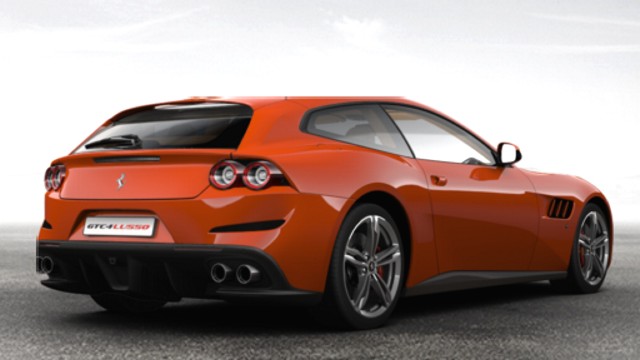
Pressure sensors are the first bigger new thing in combustion engines for over 30 years, after electric fuel injection system.
Pressure sensors consists from new theory and system. System works with pressure-temperature sensors. Sensors are installed to cylinder. New tech makes the engines much more flexible, economical, environmental and also the maximum powers increases.
Key thing in the system is, that it adjusts and optimizes ignition all the time. System uses sensor data for optimization. When engine operates in eco-mode, the system minimizes the pressure which goes into exhaust pipe. In power mode system maximizes the pressure during firing stroke. Normal mode is in between economy and power modes.
Besides ignition, with system it is possible to adjust valves' timing ( opening and closing moments ). Toyota has used VVT engines almost two decades without sensors. These engines adjusts valves timing. Without sensors Toyota hasn't been capable of getting much advantage from the tech.
Both ignition and timing affects to the amount of energy you get from the stroke. The actual engine power comes from the amount of energy per stroke and rpm ( revolutions per minute ).
- - High compression engine - -
After that came diesel. Diesel has more actual-torque than petrol engine. The torque comes mostly from high compression ration.
Diesel engine misses spark plugs. Diesel uses high compression ratio for igniting the fuel. Adding spark plugs into diesel engine is not possible. On the other hand petrol starts to knock after compression ration grows over 10. Ten was considered to be maximum ratio for 98 octane petrol.
This resulted into semi-diesel engine, which uses diesel's high compression ratio, ignition system and high octane petrol. It turned out, that the biggest problem is not that big after all. It is rather easy to get and distill required high octane petrol. Base octane comes from the amount of coal in oil. All you have to do is to recalibrate distilling towers.
The required octane for high compression engine's petrol is not yet known. In 2017 Ferrari's V12 engine used 13.6:1 compression ratio with 98 octane petrol. It was the only engine in the world, which used over 10:1 compression ratio. All the others followed old 10:1 max rule. Ferrari V12's s high compression ration lead into further research of the knocking.
Knocking, which prevented usage of high ratios, turned out be one form of turbulence. This resulted into high compression engine, which has short stroke and less cylinders than traditional diesel / petrol engine. This construction increases the cylinder's diameter, which reduces knocking and turbulences. It provides also as much momentum to the crank system as traditional diesel-petrol engine.
Ferrari's high compression V12 engine fits into theorem. It has short stroke and relatively big pistons. This V12 hints, that air petrol could be thin enough for the high compression and heavy duty engines. Ships and other big engines, which uses sticky, heavy fuel, needs improved distiller in to their fuel system.
- - Upgrade : December 2019 - -
High compression engine is still possible. High pressure in cylinder increases pressure and heat losses. Combustor or vacuum collector for semi diesel must be very efficient. Without collector, great deal from the gains you get from higher temperature-pressure system, goes into exhaust pipe. Such downgrades the fuel efficiency. On the other hand pressure sensor tech brings lots of power to low rpm area. 400 hp engine for rig, has almost flat power curve, you get 350 hp almost right after idle rpm.
High compression has also air pollution problem. High compression engine breaks the dirt in air much more efficiently than common petrol engine. Air must be filtered well before it is pushed to cylinder.
- - Fuel Injection - -
By default pressure sensor engine uses common fuel injection. Direct fuel injection is possible.
- In direct fuel injection, the fuel is mixed with air at the same time the mixture goes into cylinder. Direct fuel injection is safety measure for diesel engine. When you keep the intake manifold free from fuel-air mixture, it ensures that fire does not spread into intake manifold. High compression engine uses 98-102 octane gas, it does not set into fire as easily as diesel-air mixture.
- Direct fuel injection is not actually direct injection. It only sprays fuel directly into cylinder. The nozzles are in intake manifold, not in the cylinder. Direct injection is expensive, it needs one additional timing system for spraying the fuel at the right time.- - Gas exchange - -
Gas exchange got a new electric turbo. Electric turbo collects energy from exhaust gases into electromagnetic battery. Exhaust turbo can create also steady vacuum exhaust manifold. This vacuum improves emptying of the cylinder. Counterpart for exhaust turbo is intake turbo. This turbo creates steady overpressures to intake manifold. Primary controller of the turbo is the sensor system. Electric turbo needs additional pressure sensors to intake and exhaust manifolds.
Air filter is completely redesigned. Air filter has pre heater for improving the gas exchange and firing. With pre heater you can adjust and increase the inlet air's temperature. The pressure inside the cylinder varies a lot by the temperature of ingoing fuel-air mixture. With pre heater is is possible to optimize the pressure, boost the engine power at low rpm. If you for example drive 90 km/h at 2 000 rpm, with pre heater car goes 90 km/h with 1 800 rpm. Engine burns the fuel more efficiently, and the fuel consumption drops. Pressure sensor system controls also pre-heater.
- - Pollution - -
Hot, high compression engine increases air pollution. The pollution is born during the firing event. The source is dirt in the air. The sensor engine needs better air filter.
First there is traditional rough filter, which cleans the inlet air from bigger trashes. Then comes particle filter, which cleans the air from smaller things. The filter has slots for installing electric and chemical air cleaners. It is not yet known, what kind of poison NO2 is. It can be CO, CO2 like result from the lack of oxygen. If so, new filter does not need a unit for cleaning inlet air from nitrogen. Otherwise lonely nitrogen atoms must be removed from the inlet air.
During environmental stage it turned out, that catalyst converter increases air pollution. It burns unburned dirt from the exhaust gases and makes them invisible for eye. Besides that converter wastes fuel and free oxygen atoms. New filter improves air quality in big cites. Quite a lot.
- - New Blocks - -
High compression engine requires completely new engine design. Block must be redesigned. The existing blocks do not have enough space in between cylinders, for boring the cylinder for bigger pistons. Creation of the new block is always a big, lengthy job. There aren't any formulas or computer programs for calculating required strengths and others. There aren't any handbooks for the block designers, either. First you make a design, which looks good. Then you make few blocks and test how they last in practice.
Last time blocks were designed was, when OHV engines were replaced with OHC and DOHC engines. OHV engine has camshaft in block, OHC and DOCH engine has cam/cams in the cylinder head. Besides cooling and lubrication systems, the mountings for the crankshaft must be relocated. Easiest way to build new block is to start with some bigger engine. Slice part from the top. Make required changes to the sliced block. When you do so, you get the correct crankshaft strengths and fully functional lubrication-cooling system from the old block.
- - Copper Cooling : 2019 - -
The engine will get copper-cooling rods into block. These rods replaces water channels in the block. Cooler-radiator unit is currently made from copper. It is painted to black. Rods are needed for combustion / vacuum collectors. Rods removes water from cooling. Cooling is made with air.
- - Hydraulic Transmission : 2019 - -
Another demand for combustion collectors is hydraulic transmission. An upgraded version from automatic gearbox. With hydraulic transmission it possible to lead power from more than one power source to power transmission system. Hydraulics allows you to control / balance the powers you get from attached power sources.
Sensor engine, with hydraulic transmission and combustor, forms the bottom plate for car. Combustion collector needs lots of space. Collector is built so, that it forms base beam system for car. Collector plate is quite a lot stronger and safer than current 2 beam system.
In private car, the whole power system is 15 - 20 cm high plate. You mount the body safety beams over the bottom plate.
- - Power curves of Pressure sensor engine - -
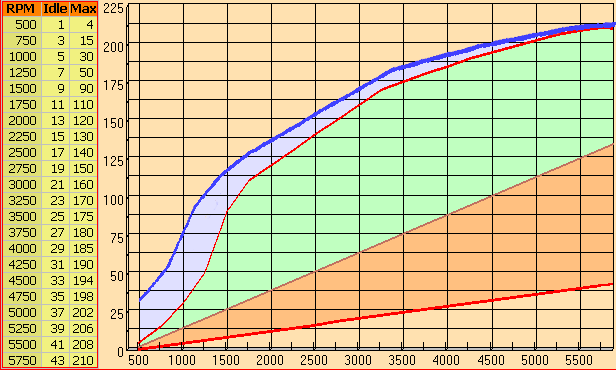
In this imaginary picture you see pressure sensor car's power curve. At lower rpm sensors create a bump into curve. Traditional power curve is almost linear until power peaks and starts to fall. Without sensors the maximum power would also be smaller.The area in between red lines shows the power with different filling ratio. The power curves, which are currently made from engines, shows the maximum power, only. With sensors you can calculate powers from pressures. You can also calculate how efficiently engine burns fuel.
Brown line-area shows the way you use the power in every day traffic. The curve comes from speed with what you drive (with single gear). The air resistance grows almost linearly at everyday speeds. Parabolic curve sharpens at around 140 km/h or 80 mph. With gears you adjust the speed of car at lower speeds, then you get power for accelerations. When you change gear up, rpm lowers, you do not usually notice how combustion engine suspends and smoothens the switches. After switch engine "searches" the old power with your assistance. Old power, which is needed for maintaining the speed. Theory around switch is much more complicated, than switch is in practice.
Green area is the available power at certain rpm. It is the area you can use for acceleration and hill climbing. It is the one, which makes the everyday torque to car. You take it to use with gas pedal. It is possible to calculate and show the available power reserves.
- Upper red curve shows the maximum power / rpm. If the brown line goes over upper red, car slows down.
- Red curve at the bottom shows you the rpm with what the emissions are measured. Emissions are measured with unloaded engine.
- Blue area shows you the power you can get with pressure and temperature booster's.Fully utilized sensor tech raises the maximum powers near constructional maximum power very quickly. Maximum constructional power comes from the strength of block and parts which are used in engine. Very different from for example traditional turbo or super charged engines. Both results into reduced power at low RPM.
- - Closing statement - -
With cold fusion and combustion it is possible to collect heat from exhaust gases. Fusion can be used for cooling. At some point cold fusion is certain to replace current A/C systems from the cars.
Sensor system is brand new system for engines. Most parts do not have any ancestors. These parts have their origin in new better and more detailed operating principle for combustion engine. New operating principle is based on the idea that pressure is potential kinetic energy. Pressure has existed for ages, but it has never before considered as potential kinetic energy. Potential kinetic energy is a brand new form of energy.
If you are interested to go deeper, you find the actual researches from DPS-RD site.
Digital Dashboard and Safety
In principle sensor systems and all engine electronic systems should be independent. You should never make wired connection in between sensor system and some secondary system, like media player. They can use the same display, but otherwise they should be independent. Wire always makes it possible to hack or rather disturb the system ( cause malfunctions into the essential system ). A broken ... for example media player ... can also cause disturbance into essential system via wire. It is the way electricity behaves. When common computer's hardware gets broke, it is very common, that you cannot say right away, which part went broke and causes malfunctions. One broken part almost always causes malfunctions in somewhere else, too.
Integrated system is impossible to repair and expensive to replace. Important gauges ( speed-o-meter, tachometer, water temperature, fuel gauge and oil pressure ) should have independent displays / indicators. So, that one broken secondary sensor never results into a total blackout of the dashboard. You can use single dashboard panel, which contains the required independent display units. With jumper settings it is possible to create display units with multiple layouts. Pressure bulb display is not very sensitive to temperatures. It doesn't need glass and filters for creating the image and colors.
Fashion for cars
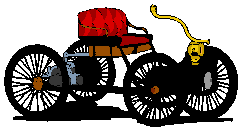 The very first cars looked like motorized four wheel bicycles.
Later 5th generation car raised front mud covers to same levels with hood.
|
Looks of the cars have trends just like women's fashion. You can always evaluate cars age from it's looks.
The very first private cars were much like bicycles. These cars never got popular.
The second generation of cars got mud covers and roofs. T-Ford belongs to second generation cars. In the beginning roofs were made from fabric.
Third generation connected back mud covers into body. Third generation came in late 1920's. VW 1200-Beetle, Citroen CV2 belong to third generation cars. The last 3rd generation cars were made at around 1935 and the conversion to next generation began. Cars which are made after 35, before World War 2 do not have separate front lights any more. GM embedded front lights into hood, Ford into mud covers.
At around 1941 fourth generation connected front mud covers into body. 4th generation car always embedded headlights into body. Mud covers are still visible bumps on the sides. Hood narrows towards front. The hood ends to higher spike. Steps under the doors got smaller and vanished during 4th generation.
In 1950's cars got the current shape. 5th generation car hide both wheels into body. Cars from 1950 to 1955 have still higher hood than front mud covers. After 1955 front mud covers reached hood, sometimes covers were higher than hood. Cadillac and other tail cars are most notable from these cars. Morris Mini was designed in early 1960's. It has round shapes and front mud covers are visible in the body. During 5th generation American and European cars started get their own looks. First 5th generation cars looks still much the same, differences started to grow during 5th generation.
After 1962 sixth generation car got so called soap box design. Car missed rounded shapes. Looks came from the new ruler oriented design methods and newly improved manufacturing techs. Soapbox car is easy to park, you can see all corners clearly from drivers seat.
In 1970's soap box was upgraded to safety car. Safety car got bigger, horizontal bumpers. Otherwise safety car looked like soap box car. US cars got upright rear windows. The upright fashion last till 1990's. Japanese cars gave up from soap box looks, rounded and coupe like bodies were common. At around 1980 Japanese cars fell back to old, sharper soap box looks. In Europe soap box got a trunkless variation in late 1970's. VW Golf for example.
7th generation car was designed in wind tunnel. 7th aerodynamic generation came in to fashion during 1980's. The shape was inspired by oil crisis, and demand for reducing fuel consumption. Most European and Japanese cars got aerodynamic 5 door fastback version. US cars held the old soap box looks until 1990's.
Most new, best selling cars belong to upgraded 7th generation. Upgraded generation car is 7th generation car with a small fall back to the older soap box looks. Front and shapes are sharper than before. Upgraded body came at around year 2005. Car's side window line begins from the hood, not from the below like before. Older body always lowers the window line at side mirrors. Lowered side window line came into fashion in 1980's. Removal of the lowered side windows creates the tank-bunker like looks to newer cars ( when compared to older cars ). Poorer aerodynamics and reduced windows area are well known downgrades to car's qualities. Difficult to avoid impression, that new cars are poorer than old cars : The downgrade does not end into these two very visible things.
Continental differences in looks have vanished from the cars. Car lasts 10-20 years. 7th generation has dominated markets almost 40 years now. From the looks it is nowadays rather difficult to say, how old the car is. Changes in looks are so small. With new paint, head and rear light units you can fool almost anyone.
Small vacuum cooler gives designers a chance to make major chances to the looks of the new cars. Cooler and demand for cooling prevents you from making major changes to the front. With vacuum cooler and boxer engine, you can create almost flat noses to cars. Required height inside the body is 20-30 cm. Vacuum cooler is about the same size than car battery. Downgraded battery size releases space from the engine room, too. Mini had 10 inch wheels, never heard anyone made complains about Mini's small wheel size. Nowadays people drive cars more and more in cities only. Aerodynamics meaning in city speeds is marginal. It allows the increase in side projection and poorer aerodynamics.
In general, basic demand for major change in looks is, that car and cars are selling well. When car manufacturer brings new look to markets, it takes quite a long before eyes get used to new looks. Until the time people get used to totally new looks, new looks downgrades sales. After people gets used to new looks, it improves the sales. When car and cars sell well, the time new look scares buyers is short.
Small cars have different timeline for fashion, best selling small cars lived so long. They had all unique looks, which is somehow connected to the time of design.
- - - -
In 1930's, after cars and car manufacturing became popular, cars were made for domestic customers. Up till 1980's cars origin said quite a lot about the way car is. Asians and Japanese are around 10 cm or 4 inch shorter than Europeans. Japanese cars were smaller and better equipped than others. German cars were big, ascetic and powerful. They had hard suspension. Vikings and Swedes are another bigger European race, Swedish cars were also big. French made cars were comfortable. They had soft springs and armchair like soft seats. Italian cars were small and powerful. British cars were cheap, then they had technical specialties in their construction. Britons built expensive cars for nobles and cheap small cars for commoners. US cars were made for traveling long distances. They were big, reliable, powerful and soft.
Before British car industry collapsed Vauxhall and British Ford had nothing in common with German Opel and Ford. Models and cars were totally different from each other. In USA car makes had usually their own set of engine options. There was Cadillac V8, Chevrolet V8, Pontiac V8 and so on. Nowadays GM uses Chevrolet V8 in all makes.
The longest living car design is Morris Oxford from 1950's. Oxford was built with license in many countries. In India cars name was Hindustan Ambassador. As Hindustan Ambassador Morris Oxford lived over 60 years. Without face lifts and bigger changes.
After Oxford comes VW 1200 [ Beetle ] and Citroen CV2. They were both designed before WW II, manufacturing began in early 1950's. Cars held their popularity around 30 years. Second oldest T-Ford, Morris Mini and Fiat 124 [ Zhiguli-Lada ] lived around 20 years. Number of cars which have lived 10-15 years, with facelifts, is big.
Facelift means, that lights, grill and plates are changed without changes to chassis and supporting beam system. Besides beams, basic characters for steering and suspension remains unchanged. Engine and transmission lives lives of their own. Jack's 1991 Caprice is from the second last year, because 1993 model got new, smaller high rpm V8 engine. Crash tests are one way to define generations. New design, next generation car, needs to go and pass crash tests.
Traditionally car's lifespan is 8 years. Next generation comes after 8th year. New design and technical improvements usually improves sales, so the car design is killed and replaced with new after 8 years. Think that all car makers uses the policy with their best selling models. US car makers used 4 years lifespan up till 1980's. From 1950's to oil crisis great deal from US cars got smaller and bigger changes to their looks almost every year. Styling of the front and rear was changed. After oil crisis yearly changes to looks started to vanish. When you renovate old US cars, front-rear lights, grilles and bumpers can be tricky to find. Interior and especially tech are easy.
Traditional American full sized car got it's final form at around 1960. The concept remained almost unchanged till 1990.
- - Safety car from 1970's - -
Safety car looked like soap box car, but the body was brand new. Body was designed with crash tests. Safety car's body has foldable front and back. Folding front and back reduces G forces, which affects to the passengers during crash. Beam system for folding front is designed so that, in crash engine goes under the passenger compartment.
Originally crash tests were made with marginal 5 and 8 km/h speed. Then the speed was raised to 30 km/h. Safety of the car was merely a marketing trick, until USA raised the crash test speed to 55 mph or 88 km/h. Before you can sell a car in USA, car has to pass 55 mph crash test, without killing passengers. The hike in crash test speed took place after the fashion in looks had already forwarded to aerodynamic 7th generation.
In crash tests, big car is not allowed to demolish smaller car. Crash tests has also some limits for the forces, with what the test car hits the cement block. Big car is always safer than small car. Addition to safety comes from the demolition of the smaller, lighter cars.
Safety car brought safety to cars' looks, but it didn't bring safety to cars. Safety was an issue long before safety car. Before safety car, safe car had a strong body. You can find safety related pictures and comments from the old car ads and introductions. In the old ads safety equals to strong bodyworks.
Most things, into which car's safety is based, were developed before safety car. Safety car added these things into car standard. There are seat belts, air bags and folding steering column. Then cars have windows, which does not go broke into sharp pieces like common glass. Materials in passenger compartment do not burn as easily as common fabrics. Fuel tank is usually placed near rear axle, far from rear. So that it survives from the back crash. Dashboard, cabin in general, misses sharp shapes, which could hit you like a knife in crash. Idea in rear window brake light is, that it is visible through the windows of the car behind you. Mechanism, which keeps the doors closed, has a system which tries to keep doors closed in accidents. From the engine room you find a system, which cuts power from the ignition. Another safety system plugs the fuel pipes.
Most from the car's safety comes from body and beam system. Car is always built over two beams. Beams begin from the attachment of the front bumper, after front wheel the beams have curves. They come to the doors. After doors beams go behind rear wheel. Beams end into rear bumpers. The beams are connected from the front and rear bumpers. Cabin and trunk floors are the third things which keeps the beams connected. At the front of the rear seat there is always one connector beam. Beams which carries front seats, are under the floor. They are not connected to other beams. Only to cabin floor.
Some cars have connector beam at rear axle. All cars have detachable connector beam at the front axle. It is used for attaching engine to body.
Both beams have three to four upright beams. A-pillar goes to the front of the roof. B-pillar to the center of the roof. C-pillar raises to the end of the roof. Upper horizontal beam, which holds the upper attachment to the front wheel starts from A-pillar. Upper front beams hang in the air with mud cover plates and small beam which used for attaching cooler and lock for hood. Sometimes the upper front beam has pillar at front wheel. Left and right A, B, C pillars have a connector beams under the roof. Then there are lengthwise beams, which connects A-B-C together. Station wagon, fastback and hatchback has D-pillar at the end of the body. In sedan there is freely hanging beam under the trunk's lid. Beam starts from rear corners. Rear corners form pillar-like system. When you press or cast curve into plate, the curve always forms a beam like strength system. Folds and curves in cover plates are needed for giving and keeping the shape
Lower support for windshield and rear window are usually beam like plate constructions. Doors have also beam like plate constructions.
In rear wheel driven car the hole for gearbox-axle forms an open lengthwise beam for the cabin. Some front wheel driven cars have closed beam in the middle.
There are three basic chassis-body systems. Oldest is separate beam chassis and bolted body. Still used in vans, trucks, etc. Best known bottom plate car is VW 1200. Bottom plate chassis has plate beams and floor. All tech, including steering wheel and pedals are attached to the bottom plate. Body is attached to the plate with bolts. New cars are like bottom plate cars, but the body is welded to bottom plate. Pedals, steering column-wheel and brake cylinder are attached to body. Welded body is stronger than bolted. It makes welded body-chassis system is lighter than bolted.
Beam system is independent from chassis-body system. All terrain vehicle uses X-beam chassis. In X beam chassis two main beams are connected together with only only two connector beams. The two connector beams forms letter X in between the main beam. X-beam chassis can bend much more freely than common chassis. All terrain vehicles X beam chassis is almost always separate steel beam chassis. So that the body does not have to bend as much as chassis. Plate beams do not last bending as well as solid steel beam.
In 1970's roll-over safety issues killed convertibles. There was a time, when mass production of convertibles was forbidden. In Europe the ban was much longer and tighter than in USA. During the ban targa roof was the only allowed open roof system. In targa, there are beams in the back and center of the roof.
Safety issues killed also HT cars. Hard top car misses B-pillar. In selected crash types long roof without center support folds too much.
Before convertibles and HT cars, safety issues killed suicide doors. Suicide door opens from the front. In crashes door opens easily. When door opens, body always loses a lot from it's strength.
- - Grills and rear engine cars - -
Front engine car without symmetrical front grille, is almost certain to get longer and bigger downgrade to it's sales number. From the newer best selling cars European-made Ford Sierra from 1980's is obviously the car with longest life without grille. Eventually Sierra got grill, just like all the other attempts.
There are quite a many popular rear engine cars without grille. VW 1200, Fiat 600, Fiat 850, Fiat 500 and Sunbeam Imp had rear engine and front without grille. There was also small best selling front wheel driven cars. Most notable are British Morris Mini, French Citroen CV2 and Renault 4.
US made Chevrolet Corvair and Czech made Skoda and Tatra belong to rear engine cars. Other US and Soviet made cars had front engine and rear wheel drive. First US made front wheel driven car was Oldsmobile Toronado from late 1960's. Japanese-Asian car making blossomed at the same times rear engine car died.
Best selling rear engine car died in late 1960's to safety issues. Light front makes steering difficult, front wheels do not have much grip. In front wheel driven car the same problem comes from the overweigh at front axle. The mass you try to redirect is too big for the existing grip. Then part from the grip is used for moving the car. When front wheel driven starts push and go straight ahead, you should always release the gas. It maximizes the grip for steering. With manual gearbox, you should use clutch only for getting locked wheels rolling again. Engine and transmission provides a smooth braking effect, which slows down the speed. The soft braking increases the grip. Lower speed reduces the forces, wheels have to redirect.
Front wheel car driven has problems with strength. Especially when car is equipped with powerful engine. Joints, which allows you to turn wheels, tend to get broke. In the past broken joints were very common. Besides strength problem, the joints have problems with sealing. Front wheel driven car has problems also with full-throttle acceleration. In full throttle acceleration front raises so much, that front wheels loses the grip and start to slip. Front wheel driven car is kind of a doomed to lose to the rear wheel driven car. Dragsters and some heavily tuned muscle cars uses special rod system, which activates in acceleration and moves more weigh to rear axle. Dream and sport cars have engine in the middle / back, they do not need weigh shift systems.
Dragster and weigh shifter car needs wide rear tires, so that you do not overload the tire with weigh. The overall drag force comes from the area which touches the road and the pressure with what the car pushes the tire to the road. When rear engine car goes straight ahead, the pressure is too low. When front wheel driven car continues to go straight ahead, the overall drag force is too small. When things gets tough, on snow and ice narrow tire is best ( pressure dominates ). On dry surface wide tire is better ( overall drag force dominates ). On wet and sand the best width is dependent on friction ... how slippery the road is.
Car sales
During it's lifetime car changes it's owner around 6 times. Due to this, the most common car deal is made from the 2nd hand car. Disturbance in the chain always affects to the sales of the new cars.
The chain begins from the sales of the new car. The sales is almost always trade, where the buyer of the new car gives an old car as part of the payment. The money, buyer gets from the old car, belongs to key things in deal making. If your offer from the old is considerably lower than competitors, you never get the deal. No matter how good the car is.
Idea of the photo show is to collect models on yearly basis. Archive the older models. Their data, photos and introductions.
Up till late 1980's cars were built to storages. Without paying much attention to sales. They were sold and / or shipped to resellers. Resellers had also storages, from where you could get car almost right away. When sales went down, number of cars in all storages started to grow. In early 1980's it was possible, that new car was manufactured year or two ago.
Think that nowadays most car manufacturers build cars with orders from resellers. Big resellers and distributors/importers have small storages from the best selling with most popular colors / interiors.
- - 2nd hand safety - -
Car's safety falls quite a lot with mileage. When you drive the car, body and chassis lives all the time. In suspension event one corner from body-chassis raises few millimeters, quite often body-chassis system looks like screw.
These continuous changes softens the steel, and downgrades the strength of the car. When an old car is taken to crash test, it always falls far behind new car. Results from old cars crash tests are usually shocking. Fall takes place also in cars, which looks okay : Body and chassis are not corrupted, seals are okay, all bolts are in place. This weakening takes place with mileage, it is not time related. In suspension coils are made from steel, they last bending much more better than steel which is used in body. In principle it is possible to create a steel compound, which keeps it's strength and cars safety better than currently used compounds.
Spring and weakening effects belong to general characteristics of steel. In general levels the spring effect makes steel ideal and safe material for chassis and important parts in body. Steel doesn't crack to temporal overpressure like for example fiber.
Collector's items
In general levels US car makers concentrated in mass production. Mass produced car do not have much chances to raise into collector's items. There are always many survivors from mass produced cars. Fully restored T-Ford, for example, is never very expensive to buy. Car, which interests collectors should have small production numbers. Alternatively a knowledge, that most manufactured cars are destroyed, raises interest amongst collectors.
Notable ( usually first ) owner gives additional value to car, not necessarily much. Museums always print notable owners to car's introduction. From TV and movie cars original Batmobile from 1960's has toured in car shows. Have a hunch that Knight Rider's KITT ( tv series from 1980's ) would also have toured in car shows.
From the below you find few cars and car makes, from which museums and collectors are most interested. Right after these classics comes many attractive cars. Too many for listing them here. There are successful race cars, big limousines, cars with national interest and cars with significant technical improvements and innovations. When you build commercial collection to for example museum, you should always include old best selling cars to the collection. The cars with what pa and grand pa used to drive. Cars with personal connection get as much as interest amongst visitors as an expensive, exotic Ferrari.
- - - -
Most appreciated old car is considered to be French made Bugatti Royale. It is big limousine with 12 liter inline 8 engine. Bugatti built 7 Royales. 6 is left. All remaining Royales have been restored and most placed into museum. 3 from the manufactured Royales were left unsold. Bugatti made many engines for Royale production. Bugatti downgraded unused Royale engine's powers. They were used and sold with fast Bugatti trains. Ettore Bugatti had one son. He died in 1939 to car crash, Bugatti cars died soon after Ettore died in 1947. Bugatti was an advanced sport-luxury car maker. Other old Bugatti sport cars are also widely appreciated. Race car Bugatti Type 35 is the second car in line, comes after Royale. Kind of a first reachable Bugatti car to a collector.
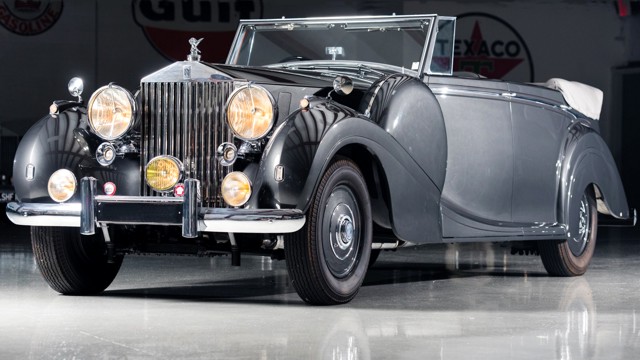
Old prewar Rolls Royce is always a collector's item. People do not know Rolls Royce models very well. It does not usually matter whether the car belongs to Phantom or smaller series. Model names of the Rolls Royce varies with the time. Phantom has never been used for smaller model. First smaller RR model was 10hp, bigger was 30 hp. Second big Rolls got a name Silver Ghost, in 1925 Rolls Royce Phantom superseded Silver Ghost. After that Phantom has been a name of the big Rolls Royce. During years 1990-2010 there was only LWB version from the smaller Rolls.
Ferrari from 1950's and early 1960's has lots of status. In 2018 these Ferraris' were the most expensive old cars. In 2014 they were 2nd and James Bond's Aston Martin DB4-5-6 was the most expensive. Production numbers of 1950-1960 Ferrari models are very low. Usually less than 20 cars were made from the model. Models, model names, engines and looks were altered almost every year.
American Packard and French Panhard et Levassor are dead car makes, with some special value. Both manufactured luxury cars, the glory started to fade after WWII. Makes died at around 1960. Panhard is the first French made car. It pioneered many things to 1st generation cars, Panhard lives in a panhard-rod. Panhard rod is simple rod, which prevents solid-stiff axle's movements in sideways. Packard is the first US made car. It developed quickly into a leading US Limousine. Packard developed many accommodations to cars. From the old US made car makes Auburn-Cord-Duesenberg has also special value amongst car collectors. Auburn-Cord purchased Duesenberg in 1930. Company and fast, luxury cars died in 1937.
Fully restored T-Ford, which belongs to all bigger collections, is rather cheap to buy. Same goes to Chevrolet Corvette, the first US made sport car ever. From Corvette could say that the 1st generation car from 1950's was a commercial failure. The first successful Corvette was 2nd generation car from 1960's. It introduced the looks of the car.
Currently, in 2018, the most wanted collector cars are GT and sport cars from 1950's and 1960's. From the items of the time could mention Jaguar E-Type (1961), first generation Ford Mustang and naturally Cadillac -59 convertible. Mercedes SL 300 Gullwing 1954-57 is valuable car. In gullwing doors are opened from the bottom. Weird doors have made the model well known.
People do not make much difference to Cadillac 75 and smaller 62 convertible. Often considered to be the same, they look the same, only difference is in size. Cadillac 1959 is car classic, bigger car collection should always have Cadillac - 59. There are many fully restored units available, prices are relatively low. Never seen Cadillac 59 convertible or coupe with over one million price tag.
When Jaguar E type was introduced, it got awful lot of attention in car shows, news papers, etc. Good looking, fast and easy to drive.
Latter sensation De Lorean, never got very popular amongst buyers, gullwinged De Lorean was introduced 1981 and discontinued in 1983. The hype was based on De Lorean's earlier success. He was performance oriented leader of Pontiac division. He created sportish image to Pontiac cars. Gullwing door opens from the bottom, hinges are in the roof. Butterfly door opens in upward direction from the back. Hinges are in the front. Butterfly doors are rather common in sport-dream cars. Butterfly door does not need any space in sideways.
Another sensation from 1970's was a self made car with 1 500 hp Rolls Royce plane engine. British made car was related in all motor magazines, it was said to be so fast, that no one catch it. Eventually it turned out, that car not as special as it was said to be. The engine was 750 hp tank engine, and the car was not as fast as it was said to be. At around 200 km/h speed car became impossible to steer. Think that the car does not exist anymore.
In quite many countries self made cars are still possible : Self made car does not need crash tests and other expensive things. In the past self made cars were over US made chassis or VW1200's bottom plate. Bodies were attached to chassis with less than bolts. Replicas were usually over US chassis and beach buggies over VW1200 bottom plate. Nowadays you can buy chassis / bottom plate without body. From at least Australia you can get a replica from any car make-model you wish. Company makes replicas for movie makers. If you want to use old car everyday, replica is usually better than old classic. Broken or crashed classic will ruin the rest of your ... day.
- - - -
During recent years Ferrari from 1950 and early 1960's has been the most expensive to buy. Due to the price boom and rather big total number of old Ferrari cars, the general availability is good. Troubles begin when you search certain / specific Ferrari model. In Summer 2018 the highest price tag was $60 millions. The most expensive with "realistic" prices were few millions. From few millions, you can go down to little over $10 000 per car. Within this range there are all kinds of cars for all budgets. Assortment for the lowest possible prices and budgets is limited.
Prices of the more common old cars varies with the time and trends. In 2012 cheapest Porsche 911 cars were around $15 000. In 2017 cheapest units cost around $50 000. Besides rarity and trends, the condition of the car has big effect to the price.
In 2018 common old sedan cost from $10 000 - $20 000. Price of an old sedan is dependent on condition, state of renovation. Not much from the make, model and year. 2 door coupes and convertibles cost more. In 2018 most expensive were $70 000 - $80 000. Demand for coupes and convertibles are higher. It shows also in availability, number of saved and renovated units is bigger. Rather easy to find special versions and cars.
Most from the available units come from the hobbyists. As money making business old cars are tricky. Sales prices are flat. On the other hand renovation costs do not have any limits. Cost of renovation goes easily over the sales price.
When you start to play with older cars, widespread corrosion in the chassis is almost impossible to fix. After corrosion begins, it never stops. Corrosion is slow form of burning, in corrosion steel-iron starts to react with oxygen. Other things are more or less easy to fix, as long as you can find suitable spares.
- - - -
When collection of new, expensive and exotic cars is waste of money, private car museum/collection is one way to invest money. Museum collection gains value by the time. When you do not pay too much, old car hardly ever loses it's value with time. In 2015 Caprice and Chevy Van from early 1990's had just reached the lowest price. They were about to go to salvage yard or renovation.
Car's price falls as long as it is suitable for everyday usage. The fall takes place with percentage. In principle the percentage comes from the remaining lifetime of the car. When measured in money, expensive dream car and limousine loses much more than cheaper car.
If the car is still in rather good condition at the end of it's everyday life, the price starts to raise again. Although or because the prices are low, it is usually rather difficult to find the bottom-line cars. Common bottom line cars are often taken to salvage yard without a single attempt to sell them. With an exception of an old American with V8 engine. They are hardly ever taken directly to salvage yard.
- - - -
When you drive old car. They usually have manual gearbox, without synchronizer. Gearbox without synchronizer needs, that every time you change gear you push clutch twice. When you shift downwards, in between the clutch usage, you push throttle ( raise the speeds of axles in gearbox ). Otherwise gearbox raises big noise, it is in danger to get broke. Fully synchronized gearbox became standard in passenger cars in late 1960's. Double clutching is not very difficult thing to do and learn.
Very old car misses often electric starter. In the front there is a hole for crank. You put the crank into hole, rotate it with muscle power. Give the kick / required initial rotations to the engine with muscle power.
Car development got stuck with oil crisis. In everyday traffic car from late 1960's is much the same than new car. Same goes to fuel consumption. Maximum powers, top speeds and acceleration are poorer than now. But on the other hand old car does not usually suffer from Immo-like difficulties in uphills. Acceleration and speed keeping with increased load-resistance system are possible. Old car misses ABS and traction controls.
Automatic gearbox in older European or Japanese car is rare. Automatic gearbox increases fuel consumption and downgrades wheel powers. Fuel consumption and wheel powers equals manual gearbox only with direct overdrive gears.
4 wheel steering was introduced in 1980's by Mazda. It never got popular. Same happened to 4 wheel drive and turbo-charger ( in petrol engine ). 4 wheel steering messes steering logics, 4 wheel drive increases fuel consumption, turbo downgrades powers in everyday usage.
Old US-SAE power was measured without peripherals, it is always around 30% bigger than European DIN power. First generation Toyota Carina 1.6 for example had 102 SAE hp and 75 DIN hp. Japanese car makers measured and announced engine powers for both standards. DIN power is measured with water pump, generator, etc attached. SAE net is near DIN.
First after burners ... catalyst converters ... downgraded engine powers around 25%. Created increase to cars everyday fuel consumption and downgraded performance. Massive media propaganda didn't work. You had to enforce the propaganda with laws.
History of Asian car making
Asian car markets are nowadays biggest of all. Asians buy more new cars than Americans and Europeans together. Asia can be divided to three / four / five sectors, continental division comes from Himalayan mountains. It has prevented co-operation and blending of the races. China, Koreas and Japan forms North Asia. Vietnam, Laos, Thailand, etc forms South-Asia. South Asia has Pacific-Asia. It consists from island countries : Philippines, Malaysia, Indonesia, Fiji, etc. Then comes west Asia : India-Pakistan and Gulf countries. When Asia is divided to three sectors, North, South and West Asia has over one billion inhabitants.
In Asia currently the biggest growth in car sales takes place in North-Asia.
In Asia car manufacturing began in Japan. Oldest Japanese car maker is Nissan. Nissan was founded in 1914, but the first production car, Nissan Type 11, was launched in 1932. The first Japanese car came from Mitsubishi. Mitsubishi A was taken to production in 1917. After 22 cars, the production ended in 1921. Mitsubishi A cost more than imported cars, it is said to be the reason for the discontinuation.
Mitsubishi was a shipyard, after failure with Mitsubishi A company held a long break in car manufacturing. In 1960 Mitsubishi restarted mass production with Mitsubishi 500. In 1930's Mitsubishi designed one prototype, which never entered production.
After Nissan Type 11, came Nissan Type 12. After 1932, Nissan has continued car production without breaks. With at least one own design. When there is only one design, it is Nissan Fairlady sportcar-roadster. Nowadays Fairlady is called Nissan Z-series.
After Nissan Type 11, in 1936 Toyota started continuous car manufacturing. When Nissan Type 11 was a small 2 door car, Toyota AA was a big 4 door sedan. After Toyota AA, Toyota has continued car making without breaks, just like Nissan. Nissan and Toyota are also the only Japanese car makers, which were originally founded as car maker companies. Toyota has never built licensed cars, like Nissan-Datsun and all the others.
Nissan and Toyota ruled Japanese car making until year 1955. In 1955 Suzuki started to build cars. In 1960 Mazda, Mitsubishi and Daihatsu entered car manufacturing businesses. Last bigger manufacturer Honda, launched it's first model in 1963. At around 1960 Japanese economy started to blossom / recover from the costly World War II.
- - Chinese car making - -
Chinese car making began in 1958, with assistance from Soviet Union. There was limousine for party leaders and important guests, one for lesser members. Then there was one model for civil servants. Up till 1984 around 100 000 cars were produced per year.
In 1984 China was opened for imported cars. China made also a deal with VW. Production of licensed Volkswagen Santana began. Volkswagen Santana is soapbox variation from VW Passat. In 1984 VW Passat was 5 door hatchback car. In size Passat-Santana belongs to family cars.
At the same times with opening of the borders, China made it possible for Chinese to found bigger private companies. First private car manufacturing companies, like Geely, were born soon after opening of the borders. In mid 1980's Soviets tried to de-corrupt and renew socialism with perestroika.
Soon after China opened borders for car imports, China started to suffer from big trade deficit. China limited car import, and made more joint ventures with Japanese and European car makers. Domestic car production rose quickly to over one million a year. In 2014 Chinese car sales was around 19 million units. ( excluding trucks and vans ).
Most common new car in China is Volkswagen. Licensed Volkswagen has sold three times more than other makes. After VW comes a group of western-asian-chinese car makes. The best selling make ( in the group ) varies year by year.
In 2014 the most popular car model was Ford Focus. European cars are popular in China. More popular than domestic, Korean and Japanese cars. Euro GM Opel was usually sold as Buick, Not yet known the name with what PSA will use for these cars. PSA purchased GM Europe in 2017. Details from the deal are not very well known. GM Europe cars and models are manufactured in all over the world, outside USA. In many countries produced models are a mixture from US-EU models.
- - - -
In average, in welfare country number of registered cars is population per two. It means that all families have one car. Quite many has two. China has currently around 100 million cars, there is still 400 millions to go. After citizens are fully saturated, the growth dies. It happens to all new, best selling things. If car's lifespan is around 15 years, 500 million cars generates around 30 million car yearly sales. In late 1990's worldwide car sales was around 14 millions a year.
Only way to keep or renovate the fast growth is to bring significantly better products to markets. Before millennium it was common and well known policies in the IT world. Then came this group of jerks, who had great belief to their ... almost non-existing ... intellectual capabilities. Sensor tech gives you a change to develop engines and cars constantly. It takes 10 to 20 years before the system is fully developed. You get a steady flow from more economical, powerful, robust and environmentally friendly cars.
Behind the big media hype, the production and sales of the electric, hybrid and fuel-cell cars is at marginal levels. They have been developed and held available for over 10 years already. No matter how positive the attitudes are, no one wants to spend their money to them.
Chinese made cars are rare in Europe, USA and other wealthier countries. China exports cars to emerging and poor countries. License fees US-EU-Japanese-Korean car makers get from manufactured Chinese cars is the only notable effect to these countries from the fast growing Chinese car businesses.
? If you have watched lots of Hollywood movies and western news, wonder why China opened borders for car imports, in socialist-communist country power keepers have stronger demand to follow people's interest and good than in western democracy.
- - Short history of South-Korea - -
In South Korea car manufacturing began with assembly lines in 1962. Assembly line production means, that most parts are imported to factory. Besides global, there are usually few domestic subcontractors for the parts, from which the car is assembled. The first Korean made car was Hyundai Pony, 1975. Korean car manufacturing started to blossom at around year 1990.
In Korea Hyundai-Kia is the biggest car manufacturer. GM-Chevrolet ( former Daewoo ) is the second biggest. SsangYong is third and rather small. SsangYong is nowadays Indian company.
- - Short history of India - -
In India car manufacturing began with assembly lines. The very first assembler was Mahindra, it started to assemble Willys Jeeps in 1948.
Passenger car production began in 1949. Standard started to assemble Triumph models, Premier began with Chrysler models. Third traditional Indian car was Hindustan Ambassador [1956]. All three companies are dead. Traditionally Indian assembly line facility uses lots of domestic sub-contractors. In 1954 Indian government set high import taxes for foreign parts. In 1953 Indian government restricted import of cars. In 2016 Indians produced 3 million passenger cars. Motorbikes and three wheel vehicles are popular, in 2017 India produced 17 million two wheelers.
In India Tata is the only passenger car maker. Tata Sierra [1991] was a three-door Sport Utility Vehicle. Sierra is the first automobile, which was designed and produced in India. The first Indian passenger car is Tata Indica from the year 1998.
Another functional car maker Mahindra builds SUV's. Mahindra's first self made car is Mahindra Bolero. SUV was launched in 2000
- - Short history of Australia - -
In Australia car manufacturing began with assembly lines. The first assembled car was T-Ford [1925]. Holden was originally a body builder. GM purchased Holden in 1931. Holden assembled GM cars for Oceania and Australia. First Australian car, Holden Special, was launched in 1953. Ever since Holden had mixed construction. Part of the cars were assembled, part were own designs. First Australian Ford was 1972 Falcon.
Australian car assembling and manufacturing ended in 2017. Ford facilities were closed in 2016, GM-Holden in 2017. Losses, poor sales and high labor costs were mentioned as reasons.
Another commonwealth country - Canada - misses the history and own cars. Canada is seamless part of US car making. Caprice 1990-96 for example is designed by GM-Canada. Caprice was manufactured in Texas, USA.
- - Early history of US cars - -
In USA car making began 10 years after Europe. Almost first mass produced cars were runabout cars. Runabout car is small two seat convertible. Engine was in the back, car missed the hood and engine compartment. Cars got global fashion and looks in the very beginning. European car makers didn't use runabout word, but US and European cars looked the same. Runabout car died at around year 1905. In both USA and Europe. Car sales and production grew steadily and quickly till Great Recession, which began in 1929. Financial difficulties were manufacturer oriented. The early years were colored with fights from the proceeds and ownerships. Then there was fights and disagreements about technical solutions. Usually in the way engines should be made.
Model names of the early cars are design numbers / letters or maximum engine powers.
Henry Ford made the first US car in 1896. The oldest US car make is Buick 1897. Oldsmobile is few months younger than Buick, it was also founded in 1897.
Packard was founded in 1899, it began production at the end of 1899. Packard is the first actual US car maker. In early 1950's Packard purchased troubled Studebaker. Purchase delayed development of new Packard models and drove Packard into troubles. Packard-Studebaker belong to companies, which founded AMC in the early 1950's. AMC discontinued Packard as car make in 1956, Studebaker in early 1960's.
Oldsmobile is the 2nd actual US car maker. Oldsmobile began production in 1901, the car was Oldsmobile Curved Dash. In the beginning Buick built engines for non-moving apparatuses. Buick began car production in 1904, with Model B. Buick fell into deep financial troubles almost right after the production began. Key owner, investor William C. Durant came and started to run Buick. He saved Buick, in 1908 Buick was the best selling car in USA:
Dodge was founded in 1900, it was a subcontractor to Oldsmobile, later to Ford. First Dodge was Model 30-35 [1914]
Henry Ford Company was founded in 1901. It was owned by investors. In 1902, after the facilities were ready, but before the production began, Henry Ford had quarrel with the investors and left the company. Investors searched new CEO-car designer ( Henry Leland ) to company and renamed it as Cadillac. First car was Cadillac Runabout and Tonneau [1903]
Ford Motor Company was founded in 1903, with Dodge as one of the primary investors. Before T-Ford [1906], Ford built various one letter models.
General Motors was founded in 1908 by investor William C. Durant. Durant was already active owner of Buick. In 1908 Durant acquired Oldsmobile for GM. In 1909 GM purchased Cadillac and Oakland [1908]. In 1926 GM started to sell Oakland with alternative name Pontiac. In 1932 GM gave up from the usage of Oakland name.
Chevrolet was born in 1911, first cars came out in 1913. In 1910 Durant lost control over GM. He co-founded Chevrolet with Louis Chevrolet and few others. In 1914 Louis Chevrolet sold his share to Durant. In 1916 Durant took control over GM back to himself, with proceeds from successful Chevrolet. In 1917 Chevrolet was merged to GM. First Chevy had long name : Chevrolet Series C Classic Six
Lincoln was founded in 1917. Founder Henry Leland had just left GM-Cadillac, after a fight with Durant. In early 1920's Lincoln ended into troubles. Ford purchased Lincoln in 1922 and fired Leland almost right away.
First Chrysler [B-70] car was introduced in 1924. Chrysler company was born one year later in 1925. Walter Chrysler was the head of troubled Maxwell-Chalmers. First the company introduced new marquee and model ( designed by Chrysler ). A year later company was renamed as Chrysler. Maxwell Motors, the predecessor of Chrysler was founded in 1904. In 1928 Chrysler purchased Dodge. On the same year it launched Plymouth branch, with Model Q.
Mercury is another US car make without founder. Ford launched Mercury branch in 1939.
The roots of late AMC are in the early years. Studebaker began car manufacturing 1902. Another make Nash-Rambler made first proto in 1897, started mass production in 1902.
Short history from the development of the cars
First cars were primitive. During the time they have got all kinds of things, which has become a standard to common car. Traditionally the new thing comes first to the flagship models. Then it is added to the options for the best selling models. If the option becomes popular in best selling models, it is included into the things a car must have. From the story you find few lines from most significant improvements. Further knowledge can be acquired from books and various web sites.
- - Early History of engines - -
In Europe Britons pioneered motorized steam vehicles. Then British government set Red Flag Act for motorized vehicles. It killed vehicle manufacturing. Act was impossible up till 1896. Most from first cars are French made. Number of makes and manufacturers is numerous. Leading developers are German Daimler & Benz and French Panhard & Peugeot. With an exception of Benz, the first cars used Daimler engine or it's derivate. Improvements to one car spread quickly to all cars.
Throughout the times, best seller cars have been 4-stroke combustion engine cars, which uses oil as fuel. First planes used combustion-oil engines. Oil, gas and candles dominated lighting in late 19th and early 20th century. Booze was not wasted into lamps. Cheap lamp oil was widely available in grocery shops, most obvious fuel for the first cars. There was random, failed experiments with booze, hybrids and electricity.
Panhard-Levassor invented V8 engine 1902. Cadillac made first successful V8 car in 1915. Ford brought V8 engine to wider use / cheaper US cars in 1932. Later these cheap V8 Fords became the first and classic Hot Rod cars. Hot Rod is kind of a self made muscle car. Hot Rod is built or repaired from an old 2nd hand car.
- Belgium Etienne Lenoir develops combustion engine in 1859.
- German Niclaus Otto introduces 4 stroke principle in 1876.
- Austrian Siegfrid Marcus designs first engine in 1877.
- First 4 stroke engine is built by German Daimler in 1883.
- - Valves - -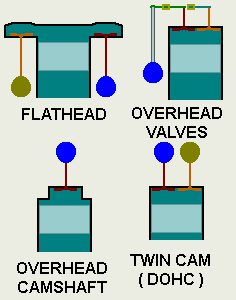
Very first engines had only exhaust valve. Inlet valve was atmospheric. Then came two steel valves per cylinder. Besides pushed cap-rod valves there has been experiments with various rolling rod-valve systems. Block-length rod valve has holes from where the gases come in and out.
The first engines were OHV engines. OHV engine has valves in the head and camshaft in the block. In the beginning of the 1910's came flathead engines. Flathead engine has valves in the sides of the cylinder. Combustion chamber is in the same space than inlet valve. In flathead engine piston hits the cylinder head. Outlet valve is on the other side of the cylinder, in exhaust chamber.
Flathead and OHV engines were used side-by-side for very long time. Ford used flathead engines in for example T-Ford. Ford's first low price V8 was also flathead engine. Latter flathead engines had overhead valves, combustion chamber was embedded into piston. There was a big hole in the center of the piston.
OHC Over-Head-Cam engine has valves and one camshaft in the head. OHC engines were obviously developed long ago. Over head cam, with direct contact to valves, allows the usage of higher RPM. But OHC engine's combustion chamber must be shaped like bathtub. Chamber must be rather high, and valves relatively small. You can compensate small valves with lift.
When OHV engine runs with high rpm, long rods - which leads from camshaft to valve system - bends. At very high rpm, rods bend so much, that they slip from the upper ball-joints, which connects the rods to the valve system. You should not confuse popping rods with valve-spring oriented rpm limit : In this limit coils, which drags valves back, becomes too soft-n-slow. At certain rpm engine starts to lose it's power or stops.
On the other hand, shape of combustion chamber is free. OHV engine can have HEMI and wedged combustion chambers. With OHV engine's rod system it is possible to build better shapes than with DOHC valve system. OHV is for example only way to build 4 valve HEMI engine. When HEMI has 4 valves per cylinder, valves have tilted lateral angle. OHC-DOHC always requires straight lined valves. Estimation is that some pressure sensor engines will have OHV lifters, with or without short rods.
DOHC engine has wedged combustion chamber and two overhead cams. DOHC superseded others and became standard in the beginning of 1990's. The engines DOHC replaced were OHV and OHC engines. Both were common up till 1990's. Before 1990's Twin Cam engine was common only in race, sport and GT cars.
Many from the new DOHC engines were designed with 4 valves per cylinder. By 2000 most DOHC engines had 4 valves per cylinder. With 4 valves per cylinder you can increase the lift of the valves and increase the area, from which fuel-air mixture goes in and out from cylinder. You can also place valves higher and increase the time you keep valves open. The pure change from 2 to 4 valves per cylinder has almost zero effect to gas exchange, with 4 valves you can fill the center better. Camshaft has to be reshaped for getting advantage 3 or 4 valve system. The area is 2PI*R * Lift. When you increase the number of valves from two to four 2PI*R remains unchanged. Rmax comes from the diameter of the cylinder, not from the number of valves.
When you increase number of valves to four, practical Rmax is smaller than with 2 valves. You have to leave some space in between the valves. You need 5 or more valves per cylinder and special double camshafts, before you can increase Rmax. With 8 valves you double Rmax. You cannot use single, straight camshaft for operating valves, which are not at the same horizontal line. Valves for first and second line are very close to each other. In four shaft system you have to raise the second shaft so much, that both shafts have enough space for rotating freely. Without switches, shafts rotation centers must be above the valves.
When you design new head, with 4 valves you can reduce the height of the wedged area in the head.
V and Boxer engine has actually 4 cams when it is DOHC and 2 cams when it is OHC. Cams are counted with per unit basis. Not with total count, like valves.
-- Early history of car electrics --
First cars didn't use electricity. Lights were oil/gas lights, they were started with man power. In principle, they had diesel engines. From the key electrics ignition and starter were developed after first cars. Electric cars came to talks in late 1960's. After oil crisis electric cars have been promoted and praised with various lies. The list from the history of electrics for combustion engine does not rule out the early electric cars, like mass produced Studebaker Electric.
- In 1820 Danish Hans Christian Ørsted discovered Michael Faraday's Law of Induction. According to common-wealth history British Michael Faraday stole the tarts in 1831.*
- Car battery was invented in 1859, Volta invented battery in 1800.
- Basics for DC generator were developed in 1866. It is not known when "small-enough-for-cars" generator was developed.
- Edison invented bulb in 1879 ( record player in 1877 ).- In 1902 Gottlied Honold from Bosch invented magneto based ignition system, first system with spark plugs.
- Battery-generator based ignition system was developed by Delco. GM introduced the new system in 1910 Cadillac. Delco is GM division which develops and makes spare parts for GM cars.- 1911 Cadillac got electric starter from Delco.
* It is not known, when Faraday was credited from Ørsted's induction research. Electrolysis is another bigger ( but lesser ) thing, which is accounted to Faraday. Electrolysis do not have known earlier discoverer. In principle, with fully discovered induction, Ørsted invented electric motors, generators, transformers and partially also the electromagnetic battery. Everything, which uses induction, has it's origin in Ørsted's induction research. After major breakthrough only inventions, upgrades, formulas and applications are possible. Also valuable things, with what you can get famous and into history books. After you are busted from one credit violation, it casts shadow to all your claims and researches. It makes makes me wonder, how many times you have violated other scientists rights ? Scientific community is tight with violations, purpose of science is to research and release the results. Widespread violations would lead into a situation, where the results are never released.
- in science major breakthrough is unique. Dispute is invention, application, formula and upgrade related. Things after breakthrough are easier to derive.- - Short History of Electric Cars - -
Europeans never built electric cars. In USA the inventor of electric bulb, Thomas Edison, designed Studebaker Electric in 1902. Construction ended 1909. Studebaker Electric inspired few companies to make electric cars. Production numbers were very modest. Typical lifespan of maker was 3 years, number of produced cars around 10. Most died before 1910. Typical electric car is small 2 seat runabout car. Both convertibles and sedans were built.
The biggest early manufacturer was Detroit Electric. It began production later than others, after 1907. Last cars were built in 1939. Although the biggest, production numbers were not very big, in 32 years company built only 13 000 electric cars.
In the beginning electric car was easier than petrol car. Electric car missed gears and demand for starting the engine with cranking. It was very quiet, when compared to petrol car.
The problems with electric cars were slow speed and short range. Not forgetting long charging times. Electromagnetic battery is first bigger improvement to batteries after 1859. With efficient charger you can re-charge electromagnetic battery faster than you fill the fuel tank. Weigh and size per Ampere hour is an awful lot smaller than in electrochemical battery.
-- History of accommodations --
In common language ( translators / dictionaries ) word accommodation is verb, it means that you provide room / house for someone.
In business language word is used from the special things, which makes living / life more comfortable or easier. Business meaning is not in many books.First cars didn't have windscreen wipers. You had a chance to open front window, and drive without windshield. Manual windscreen wipers were taken to use in between 1902 and 1917. In 1920's cars had vacuum powered windscreen wipers. Electric wipers came at around year 1930. Multi-speed wipers with washer were introduced in 1935.
Packard brought Air Conditioning systems to cars in 1939.
In 1940 Packard introduced power windows for the next years Packard 180. Ford followed, 1941 Lincoln Custom had also power windows. First power windows were hydraulic.
GM introduced automatic gearbox - Hydramatic - for 1940 Oldsmobile and Cadillac models. After introduction GM sold Hydramatic gearboxes to awful many car makers. Torque converter, the modern automatic gearbox was first seen in 1948 Buick Dynaflow. It was followed by Packard's Ultramatic in mid-1949 and Chevrolet's Powerglide for the 1950 model year. By 1953 all better cars were available with automatic gearbox. Citroen DS [1955] is the first with clutch-less gearbox. It has automatic and manual modes. In manual mode you change the gear, switch takes place immediately.
First power seats came in the late 1940s. The four way power seats, for/aft with height control were showed in 1955 Ford Thunderbird. US six-way power seat, which came few years later, has adjustments for the tilt of the cushion. But it misses the adjustment of the back. US car has to have eight way seat for back adjustment. With US counting newer expensive European-Asian car has often 10 or 12 way seats. When so, there is one or two additional adjustments for backrest, which is hidden into back. It has always for/aft adjustment, then it can have up-down adjustment. European-Asian cars are almost always sold with or without power seats. Without telling the number of adjustments.
Chrysler Imperial 1951 introduced power steering. System was based on abandoned and expired GM patents. Cadillac 1952 had the same system than 1951 Chrysler Imperial.
Power door locks were introduced in 1914, Packard reintroduced and made them popular in 1956.
Citroen's hydraulic gas suspension from 1955, with ground clearance control, is unique to Citroen. Other car makers have later used progressive coil and adjustable airbag systems for ground clearance control. Then there has been progressive coils with adjustable gas spring-shock absorber system. These miss ground control, they can be adjusted to load and they give better progression to suspension. Then there has been some special all-terrain cars, where ground clearance control has been made with adjustable control rod system.
1958 models of Chrysler Imperial, New Yorker and Windsor were the first with cruise control. By 1960, cruise control was a standard feature on all Cadillacs.
1963 GM brought tilt wheels to US cars. European and Japanese cars started to get adjustable steering columns in late 1970's. First columns had only height control for steering wheel. Current 4 way columns came in during 1990's.
In 1970's cars got electric heaters for rear window and front seats. Reverse lights and head rests were rare before 1970's. Citroen SM is the first car with rain sensor controlled windscreen wipers. It is also the first car with progressive power steering, when the speed raises steering becomes heavier. Head lights, which turn with steering wheel are almost unique to Citroen, they were first introduced in 1967 Citroen DS. Fiat 130 Coupe introduced electric power doors in early 1970's, nowadays used in space cars' slide doors.
In 1980's cars got ABS brakes from Mercedes. First digital dashboards and car-computers were introduced. Computers got popular with ODB-1 and ODB-2 systems. ODB provides interface for querying data from engine-transmission to computer-screen system.
During 1990's cars got slip-traction control systems. Remote controlled power locks are from this decade, too. GPS systems were introduced.
In late 1990's cars started to get all kinds of CPU + Sensor controlled systems. Automatic heater-air conditioner is probably the most useful from these ( when it works properly ).
- - Short history of Car Audio systems - -
First car radio was Motorola. Massive and expensive Motorola was introduced in 1930. Radios got quickly smaller and cheaper. Radios marched to the cars during 1930's.
The significant thing in size, modern analog transistor, was developed by a US team in 1948. Project leader was W. Shockley. Transistor was developed at the same times with first computer, ENIAC.
FM radio is result from WWII. The alliance wanted to limit losers possibilities to spread their propaganda to neighboring countries. They forced losers to use FM signal, which has shorter range than AM signal. Then it needs FM receiver. After it turned out, that FM broadcast has better audio quality, FM broadcasting started to spread. German Blaupunkt developed first FM car radio in 1952.
First playback system was 8 track player. It was introduced in 1965. 8 track players were not very popular Europe.
Integrated radio-cassette systems came to European markets / cars in mid 1970's. In USA C-cassette replaced 8-track players in late 1970's.
Boosters and equalizers came soon after radio-cassette systems, in late 1970's. When integrated radio-cassette system had 2x4 Watt amplifier, first booster-equalizers had 2x10 Watts.In early 1980's audio systems got standardized DIN-1 holes to the dashboard. 4 speaker systems got popular. The current speaker layout system, with speakers in the doors is also from the early 1980's. Earlier speakers were always in rear window or dashboard. New capacitor-booster tech raised maximum peak powers to 2 x 100 watts. Powers of the integrated amplifiers started to raise, too. In 1990 typical integrated amp had 4 x 20 Watts. Nowadays maximum continuous power is limited by generator. The maximum ( used ) continuous audio power must always stay below generator's capacity.
RDS radio came to cars in late 1980's. When same radio channel has multiple transmitters and frequencies, RDS keeps the station and changes the frequency automatically. RDS system is also used for giving traffic information to drivers ( hardly ever used ).
In late 1980's external sound-source connectors came to car audio systems. Demand came from Sony walkman and other similar kind of portable audio systems.
CD players came in late 1980's. In cars record player like CD player worked poorly, and got broke quickly. Cassette players were popular up till late 1990's. Typical car audio system of 1990's was radio-cassette player with 6 or 12 CD box in the trunk.
In late 1990's C-cassette died and CD players superseded cassette players ( in dashboard ). After 2000 CD player was upgraded so, that it could play MP3 files from the CD.
At around 2010 audio systems started to get USB connectors and slots for SD cards. At the same time, the first DVD player-display systems for cars were introduced. In car USB dongle lasts longer than SD card reader. Fully enclosed dongle and USB connector gives better protection against temperature and humidity changes. When integrated SD reader goes broke, a shortcut in reader unit can break and silence the whole player.
DIN-2 hole is for Audio system with display for GPS navigation. DVD player is kind of a bonus from the GPS systems with bigger color display and map. It is as wide and twice as high as DIN-1 hole. Limits the maximum screen size.
- - Short History of GPS systems - -
Mazda Eunos Cosmo became the first car with built-in GPS-navigation system in 1990. GPS systems had to wait 15 years before the breakthrough was possible. System missed accuracy, display and maps. GPS satellite network's accuracy was upgraded in the year 2000. GPS systems with proper display and road maps came and boomed after 2005.
Quite often when you need GPS system, you would need the GPS system for walking and moving in a strange place. Detachable GPS system, with own battery, is usually better than embedded system. Embedded system's constant stay in car, increases demand for durability. A broken, integrated GPS system is usually expensive to replace.
- - Short history of Car phones - -
First car phone was developed by Bell. It was first used in St. Louis on June 17, 1946. Ever since there was been car phones and mobile phones. For the first 20 years the number of places, where the phones worked was limited. In 1970's most countries nationwide network for mobile and car phones. Phones were expensive to use and up till 1980's number users was small.
In early 1980's development of current cellular phone development started from cars. Cars got cellular phone like mobile phones, with dedicated networks and frequencies. These phones and their batteries were so big and heavy, that you had to dock them into car. Docked cellular/car phones died in late 1990's.
- - Foldable seats - -
- Station wagons got folded rear seats with 1949 Oldsmobile ( based on old ad ). 1949 Dodge had also foldable rear seat, it was said to be for making entrance to third seat in the back easier. Ford got foldable rear seats few years later. Almost all old US made station wagons have three cushions and room for 9 or more people ( families and households were bigger in the past ). After WWII Station Wagons were the best selling cars in USA.
- The first fastback ( sedan-coupe with foldable rear seat ) was obviously Plymouth Barracuda from 1964. Barracuda didn't have hatch-door in the back. It had common lid for trunk. You could only fold the rear seat and remove the safety plate. Few years later same fold system was in Dodge Charger and few years from that also in Dodge Challenger.
- - Early history of Germany - -
German Karl Benz built the first car in 1886, Benz Velo from the year 1894 is the first mass produced car. Daimler built also a car in 1886, independently from Benz. Daimler began production after Benz. Both cars used 4 stroke petrol engine.
Mercedes is originally a name of Daimler cars. Daimler started to use Mercedes in 1902. When Mercedes and Daimler merged in 1926, the merged car got a name Mercedes Benz. Constructor of Mercedes [ former Mercedes-Benz ] cars is Daimler-Benz.
- Opel Patent Motor Car, System Lutzmann was launched in 1899.
- Audi Type A was introduced 1910
- BMW 3/15 from 1928 is licensed Austin, first native BMW 3/20 was introduced in 1932.Check DKW
- - Early history of France - -
Typical first wave French car maker used steam engine in his first ( and often also the last ) prototype. First production model had Daimler petrol engine.
French Panhard & Levassor built first car in 1890. Production began also in 1894. Panhard used Daimler engines.
First French Peugeot was made in 1890, production began in 1896. Peugeot Type 3 was powered by Daimler combustion engine.First French Renault was made in 1898, Voiturette Renault CV1 is also the first produced model.
Bugatti was founded in 1910.
From the remaining French makes Citroen was founded in 1919. Production of Citroen A began on the same year.
France is the first leading car manufacturer country. Books say that key reason for cars popularity in France were roads. Road network was better than in Germany.
- In 1903 France produces 30 124 and USA 11 235 cars. Worldwide production is around 60 000.
- In 1929 French annual automobile production peaked at 253 000 passenger cars. Yearly growth from 1903 is around 30% per year.
- In 1933 car production was only 140 635 units, France lost its place as Europe's top automobile producer to Great Britain 220 775. France had lead in the number of registered cars : France had 1 448 000, Britain 1 210 880 and Germany 510 680 cars.
- In 1936 France fell from second to third place. Production was 204 000 cars against Germany's 213 117 passenger cars. Since Hitler was the master of propaganda ... lies and cheats ... it is not possible to say how many cars Nazi's actually produced.In 1945 French government nationalizes Renault and creates Pons Plan act. Act favors a select group of car manufacturers. A punitive fiscal horsepower tax leads into demise of most of the Grandes Routières such as Bugatti, Delage, Delahaye, Hotchkiss et Cie, Salmson and Talbot-Lago by the mid-1950s.
Check Bugatti
- - Early history of Great Britain - -
1896 British Govenrment eased Red flag act so, that car became available for Britons. Speed limits were removed in 1930.
Arrol-Johnston (later known as Arrol-Aster) was an early Scottish manufacturer of automobiles. In 1896 it produced the first automobile manufactured in Britain.
Daimler built Shooting Brake in 1897. Mass production with various models began on the same year. All cars were powered with Daimler engine. Daimler is the first car of Royal Family. First car was delivered to Prince of Wales in 1900. Second went to King Edward VII in 1902. Daimler fell to Jaguar in 1960. Daimler was converted to more expensive, luxurious version from Jaguar. When Indian Tata motors bought Jaguar in 2007, Daimler branch was discontinued.
First all-British car came from Austin, also in 1897. The car was Wolseley Autocar 1. Mass produced Wolseley Voiturette was introduced in 1899. First Austin is Austin 25-30 [1906]
After Daimler and Austin, car manufacturing in GB boomed. By 1922 there were 183 motor companies in UK. From the below you find set of 1st cars from notable British car makers.
- Vauxhall began in 1903 ( First car was simply Vauxhall ).
- Rolls Royce 10HP [1904].
- Rover Eight [1904]First Morris was Morris Oxford from 1913. Morris dominated GB car markets for decades. Mini was Morris Mini-Minor, not Austin Mini. Later Mini was sold as Morris and Austin Mini. In 1925 Morris launched MG sport car branch, with MG Number one.
- Aston Martin made first car in 1915. First production car in 1922. David Brown saved company in 1947.
- Bentley 3L was introduced in 1919, production began in 1921. Company fell to Rolls Royce in 1931.- Triumph 10/26 [1923] ( Triumph built motorcycles )
- Jaguar SS1 and SS2 [1932]- - Early history of Italy - -
Italian car manufacturing began with Giovanni Battista Ceirano's and his brothers Welleyes car desing. Ceirano desinged the car in 1898. Giovanni Agnelli purchased design in 1899 and founded Fiat. Fiat started production right away. The car was renamed as Fiat 4HP. The same car was also sold as Ceirano 4HP. After FIAT took over the first Ceirano desing. After 1900 Ceirano brothers launched many car makes and factories.
- Second car, Isotta Fraschini ( later well known, now forgotten Italian made Limousine ) started in 1900 with assembled Renault models. First native Isotta was a race car, which was introduced 1904. First production car AN 20/30 was introduced 1909.
- Lancia started in 1907. Lancia Alfa 12HP and six cylinder DiAlfa 18HP are from the 1908. ( Lancia has used Greek alphabets in many models ).
- Alfa Romeo was originally Darracq. During 1906-1909 company assembled French Darracq cars. Alfa Romeo's own production began in 1910 with A.L.F.A 24hp.
- Maserati was founded in 1914. Maserati began with race cars. Racing continued till 1947, when Maserati A6 was introduced.
- Ferrari was founded in 1939. First car Auto Avio Costruzioni 815 came out in 1940. First Ferraris : Ferrari 125S and Ferrari 159S are from the year 1947.
- First Lamborghini is 350 GTV [1963], it is proto for production model Lamborghini 350 GT [1964]. Lamborghini began car design in 1959.
- First De Tomaso is Vallelunga. It is from the year 1963.- - Early history of Minor car countries - -
Czechs have two traditional car makes. Luxury car maker Tatra began car production with Präsident in 1897. Skoda entered businesses in 1905 with Laurin & Klement Type A.
Swedes have two traditional car makes. Volvo started in 1927 with Volvo OV4. SAAB is and was plane maker. In 1945 SAAB made prototype from SAAB 92, which was launched in 1949. Swedish car manufacturing went into troubles in late 1990's, with many others. Both makes ceased to exisase.
- - Early history of Russia / Soviet Union - -
- Yakovlev & Freze [1896] is the first Russian automobile. After that it was quiet.
- After October revolution Moskovitch began Soviet-time car manufacturing. In 1930 Moskovitch started to assemble Ford A-AA cars. KIM 10-50 [1940] is the first soviet design from the factory.
- In 1936 Soviets launched ZIL limousines. First model was ZIS-101.
- Volga was founded in 1946. First model was GAZ-M20 "Pobeda". Volga was slightly / better car than Moskovitch.- - - -
You can never save car manufacturing or factory with money only. With money you can only delay the death. Troubled company needs new attractive models and more efficient organization. Companies do not end into troubles without a reason. Lee Iaocca, who saved Chrysler from death, is the last success story around troubled car maker. Those, who have survived usually continues with modest production numbers and heavily limited product line. One year after Obama's administration had saved GM with big money only [2009], it became clear that GM will end into troubles [2017].
-- Correction to widespread common belief --
In late 1920's Germany ended into financial chaos and hyper inflation. Pre-Hitler government tried to get rid of the recession with cars and car manufacturing. German car production and sales was far behind France and Great Britain. Not known whether or not France-British governments advised Germans to do so. Pre-Hitler government ordered VW 1200 design from Porsche and started to build 1st autobahn. Hitler is often mistakenly creditet from these things. Bitter Hitler was writing Mein Kampf in German prison, when these things took place.
Hyper inflation is born, when there is much more money than actual wealth* in national economies. Hyper inflation brings balance to national economies. Via bankruptcy like effect. All national savings are lost. Domestic loans are cleared. Everything takes place within few months.
- Usually reason is in government and central bank, who pushes too much money economies. Negative interest is an example from an attempt to push more and more money to markets.
- Unreasonably high future expectations in stock markets is another way to raise the risk of hyperinflation-bankruptcy system. In stock market system you got to take loans by using the future expectations as quarantines. After unreasonably high future expectations fades from the stock values, the fall results into chaos. The banking system for example collapses.
- Real estate business with impossible-unrealistic prices, can also trigger hyperinflation-bankruptcy system. In real estate oriented system, the debt taking against fading wealth is also needed.Hyperinflation-bankruptcy system is rare result from unbalanced bank note - wealth situation. Usually the correction comes with recession, personal-private bankruptcies, foreclosures and mass-unemployment.
* Earlier available products belong to actual wealth. Wholesellers and resellers must buy and pay the available products. When they do not have money for filling the shelves, it ends to the shortage.
Slide show - Help
The new slide show has thumbnails. With controls around the big picture you scroll and adjust size of the big picture. Car pictures are all in wide screen format. Their pixel size is 640 x 360, they share the ratio with 1280 x 720 and 1920 x 1080 picture / screen size.
Thumbnails are used to scroll available pictures. Thumbnail controls do not change the big picture. You have to click thumbnail, before it replaces current big picture. There are 4 thumbnail sizes. Thumbnails have their own small thumbnail picture files, you cannot enlarge them endlessly.
All car pictures are stored in Remember Me like Web Base.
Photo sheet
Make Model Color Gene
rationClass Year Sub Body Type Length Width Wheel
BaseHeight Weigh Fuel
tankTurning
RadiusPer
sonsTrunk
SizeClear-
anceCadillac S75 Black Limo 1966 4 door Sedan Luxury packs
Pack + Options Base DL GL Luxury Class B D G Power Mirrors Power Windows Power Seats Power Antenna Power Fuel Latch Power Trunk Cruise Air Conditioning Colors
Engine id 350 V8 P 350 V8 305 V8 Block V8 V8 V8 Displacement dm3 5.7 5.7 5.0 Power modes ECP+BT Power max 210 / 5750 190 / 4000 160 / 4000 Power idle 1 / 500 5 / 800 5 / 800 Compression ratio 12:1 Fuel Petrol-98 Petrol-88 Petrol-88 Piston / Stroke + Crank Valves 32A
Powertrain
Engine id 350 V8 P 350 V8 305 V8 Block V8 V8 V8 Displacement dm3 5.7 5.7 5.0 Power modes ECP+BT Power max 210 / 5750 190 / 4000 160 / 4000 Power idle 1 / 500 5 / 800 5 / 800 Compression ratio 12:1 Fuel Petrol-98 Petrol-88 Petrol-88 Piston / Stroke + Crank Valves 32A Inlet Inj + STH Carburetor Inj + Cat Air filter R1, P1, Cx, Ex Exhaust system 8-2-1 VCS 8-2-1 Cooling Vacuum Water
Row Approbations Power modes E = Economy, C = Common, P = Power. P = Pressure booster, T = Temperature booster. Air filter R = Rough filter, P = particle filter, C = Chemical filter, E = Electric filter. Letter is followed by classification. x means empty slot. Inlet Inj = Electric fuel injection, Car = Carburetor, Mec = Mechanic fuel injection. S = Sensors, T = inlet turbo, H = Heater, Cat = Catalyst converter Valves Total number of valves. A = adjustable timing system. Exhaust system V = Vacuum turbo, T = Turbo, C = Cooler, S = Scent neutralizer
Transmission Automatic Manual Id A M Drive R R Gears 3 5 Speeds Ratios Performance
Car Model Sub Year Engine
IdTrans
IdPerf: Top
speed0-100
km/h90-110
km/h0-1000m
speed0-100
speedFuel City 80
km/h100
km/hCadillac S75 1966 350 V8 A