R&D of Putnamis
Space 2019
June 10th 2019 >
| Space 2018 | Space 2019 | Science 2018 | RD |
| |
R&D of Putnamis |
5th Oct 2019 - Visible energy flow and birth of the planet
There is one very visible energy flow from sun to earth. Sunbeams are more than light. Sun is known to radiate also invisible light. Possible that planets core gets it's energy from stars, suns and their beams. If so, stars rotational field doesn't necessarily exist in planets field systems. When so, the stars rotational field converts into planets field system. And the planets core is the one that actually rotates stars and sun.
If the gravitational field is born from pressure and density, it extends also to the birth of planets and moons. There could be dense clouds in the space, that starts to form into a core and planet.
Besides glorious triumph of science, 1969, asteroids have a rotational track, that doesn't follow planets and suns rotation.
Steel shortage is another good reason for extension to Moon, Venus and Mars. Steel and copper consumptions are also connected to the welfare levels. In western welfare countries there are around 800 million people. Without shortages ... and few other obstacles ... growing economies will double the amount of western welfare people quickly. Such un-disturbed macro level growth would also double or triple the revenues, dividends ... and also the world economies.
When prices of the basics start to raise, it kills the growth very quickly. When you deal with base businesses, you should always put weight of growth into production not into prices. Price is allowed to raise only then, when you are dealing with or running out of limited resource. When price is allowed to raise freely with demand, it creates a steady search and shift for the alternatives. When so, you are not very likely to end into a total catastrophe ( when you finally run out of the resource )
Sugar oil, R&D Power solutions, new mining tech, new recycling systems and new farming-fertilizing systems allows you remove all caps from basics. Digital democracy removes other kinds of caps from your way to prosperous ... happy and contended life.
2nd Oct 2019 - Sunbeams density in our solar system
Density vs earths kW / m2 Mercury 2,33 2,50 3,20 Venus 1,40 1,50 1,92 Earth 0,93 1,00 1,28 Mars 0,61 0,65 0,83 Jupiter 0,18 0,19 0,25 Saturn 0,10 0,10 0,13 Uranus 0,05 0,05 0,07 Neptune 0,03 0,03 0,04 Pluto 0,02 0,02 0,03 In the table you see solar beams density at each planet.
In Mercury dispersion has dropped solar beams density to 2% from the sun's corona.
We get around 1 % from radiated beams to ourselves.Jupiter is 11 times bigger than Earth. In total Jupiter's atmosphere gets more solar energy than other planets.
Saturn is around 9 times bigger than Earth. Daily portion matches ours. Mercury's daily portion is also near ours.
Uranus, Neptune and Pluto are small, cold and dark planets.Table hints, that it is possible to build atmospheric settlements into Venus and Mars.
- Sunny day in Mars matches our cloudy day.
- Cloudy and rainy day in Venus matches our sunny days.After you bring oceans and humidity to planet, humidity balances the climate. Air humidity grows with temperature. On the other hand air humidity hinders sun beams trip to the ground. Balancing system is fully automated. In Venus you live in rainforest, and Mars' natural conditions are near arctic.
If Venus is free ... UFOs don't come as far as you think ... Venus is an excellent place for farming and sugar oil production.
Since Venus is Earth like broken planet, you should find everything you need for atmospheric life from the planet. Estimated, that within one star system, all planets have almost equal assortment of elements.
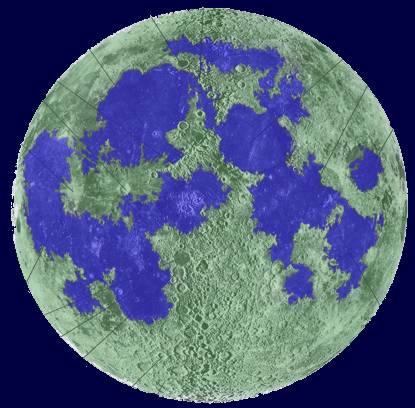
With current knowledge it is already possible convert moon into picture like living planet. All we need is water and carbon dioxide.
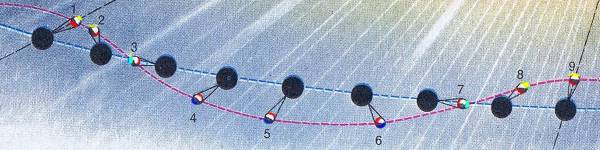
Planet with gravitational field, doesn't leak the essential elements to space. All you have to do is to find enough water and carbon dioxide.Moon day last's 7 our days, nights 7 our nights. You need horizontal water flows, for balancing temperatures during long nights and days.
In the picture you see how goes around earth during one month. Picture assumes, that earth rotates moon.
It also possible that moon rotates itself, with the same speed than earth.
If moon has rotational field, like they say, moon should rotate also itself.Same rotation speed can take place, when moon's core is similar to earth's core. Possibly extracted from earth's core.
Moon has potential for providing more area for sugar oil farms. Creation of fully functional ecosystem is easier than in space greenhouses.
There is lots of potential, suspended demand for oil. Suspended potential comes from 50 years time.
Possible that the desert field production goes in less than 10 years, and you have to convert deserts to living ecosystems as quickly as you can.Besides moon sugar beet produces fair harvests also in colder areas. Big Gobi desert with it's extensions could be converted to sugar beet fields.
Gobi is at the same latitude with Beijing, Italy and New York. Sugar beet harvests are 30 - 50 tons per hectare. One underground beet weighs 1 to 2 kg.
It is harvested / sowed once a year.
Interstellar cruiser
Interstellar space ships are very big. Cruiser mast always carry everything needed with it. They are much like old long range sail ships.
The number of crew on board raises easily to over 1000. Although peaceful, cruiser looks a lot like alien invader ships in sci-fi movies.Interstellar cruiser needs big electromagnetic batteries for crossing lightless interstellar space seas.
You need lots of electricity for maintaining light and life in the ship. Current assumption is that engines don't need power for cruising.
You charge the batteries in solar systems. Ship needs big solar cell system for collecting energy from star beams.Panel systems are telescopic and-or foldable.
Passengers need food and drink.
One person eats around 700 grams a day, one full year hectare produces 3 harvests, 20 to 30 tons grain per year. 100 vegetarians need one hectare fields.
If you want meat and milk, you got to have animals on board. They increase the required greenhouse areas.
From common cattle chickens are scavengers, the best choices for interstellar cruiser. From chickens you get eggs and meat.
Possible that you use plants, like for example cactus, for milk production.The actual required area for greenhouses comes from plant-animal exchange ratio, which is currently unknown.
Exchange ratio refers to the amount of oxygen animals need and plants produce. In space crafts and constructions you must estimate and set the ratio near 1.
With combustion engine and fire you can rather easily get rid of additional oxygen. When so, you should always produce more oxygen than needed.Unlike in solar cruiser, greenhouses can be windowless multi floor systems. In star system, you use panels for powering the greenhouses.